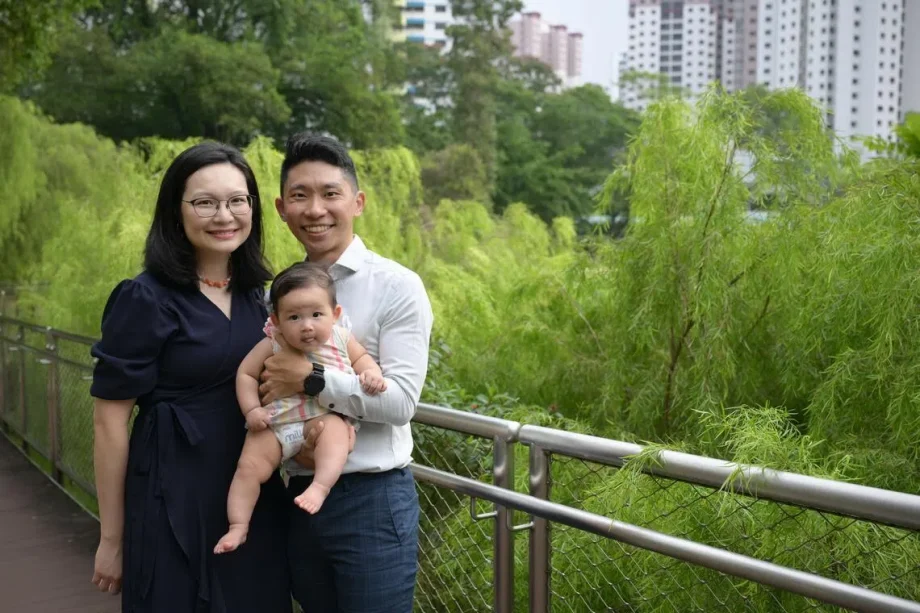
SINGAPORE – At 16, Mervin Tee spent his school holidays packing toilet paper and sanitary pads into trolleys bound for Changi Airport.
A few months later, he failed his O-level exams.
“I thought of giving up studying altogether… I was the only one who didn’t make it out of school at that point in time, so it was definitely devastating.”
Two decades on, at 37, Tee holds a PhD from the NUS Saw Swee Hock School of Public Health (SSHSPH), where he researched cognitive decline using neuroimaging. Such research involves using scans to study changes in the brain that may aid earlier detection and improve understanding of the condition.
Between those two points lay a factory job, two food-chain shifts a day, a scholarship he almost did not apply for, a stint in social work and the determination to find a career that aligned with his values.
Tee grew up in a low-income household where his parents, who had no formal education, could offer little guidance on his academic path.
The arrival of his baby brother, just before his O levels, brought added strain: his mother, a full-time housewife, had a difficult delivery, which meant more caregiving duties at home.
This was on top of a household income of about $1,800 a month for a family of four. His father was the sole breadwinner, working odd jobs in the construction industry.
“I did not have a lot of support at home. I did not have tuition, and my command of English was not as great then,” he said.
He failed the exams, scoring an L1R5 of 38 and an L1R4 of 31.
With no place in a polytechnic or the Institute of Technical Education, and his family unable to afford another year of secondary school, Tee took a full-time job at an elevator manufacturing factory, assembling buttons for $3.50 an hour.
He rose at 5.30am and returned home after 8pm, squeezing in revision for a private retake of his O levels.
Asked whether he pressed on with his studies because he wanted to, or because he felt he had to, Tee said it was a bit of both.
Constant pressure
“There was this constant pressure, the need to at least get an education certificate,” he said.
“If I don’t make it, then that’s it… It was really that one last chance to see if I could make it anywhere.”
Read Full Article At Source