SINGAPORE – Many Cabinet reshuffles – including the one on July 22, which saw the promotion of several younger political office-holders – spark discussion on what this means for Singapore’s leadership.
But the recent changes are noteworthy for another reason: They point to the country’s priorities in a world where geopolitical crises and technological change have ushered in a new wave of disruption.
With his deployments, Prime Minister Lawrence Wong looks to be strengthening the bench where the uncertainty is greatest, and where Singapore would most benefit from a clear way forward.
One such area is energy, where the challenge is to meet the nation’s growing demands while moving towards a low-carbon future.
To reflect this shift in emphasis, the Ministry of Trade and Industry (MTI) will be renamed the Ministry of Energy, Trade and Industry (METI) from Oct 1.
Manpower Minister Tan See Leng will relinquish his current role and focus his full attention on his new post: Minister for Trade and Industry (Energy and Industry).
One of his immediate priorities will likely be to deal with the continued fallout from US-Iran tensions, which has caused oil prices to skyrocket.
Beyond that, there is the bigger question of energy security as Singapore works towards its net-zero target.
Among other things, it has plans to import more low-carbon electricity from the region – a move that diversifies clean energy sources but potentially creates a dependency that could leave it vulnerable to future supply shocks.
There is also the nuclear question. At present, the country is studying the potential of deploying nuclear energy, and will undergo an assessment by the UN atomic watchdog in 2027 to determine if it is ready to make an informed decision on whether to do so.
These changes at MTI mean that the ministry – soon to be known as METI – will have three full ministers, among them Deputy Prime Minister Gan Kim Yong.
Gan will be Minister for Trade and Industry (Trade), while Grace Fu – who helms the Ministry of Sustainability and the Environment – will stay Minister-in-charge of Trade Relations.
This split of responsibilities suggests that trade, too, remains unsurprisingly high on the national agenda.
Another source of uncertainty is growing anxiety over jobs and AI disruption – challenges that two new Cabinet appointments look to be aimed at tackling.
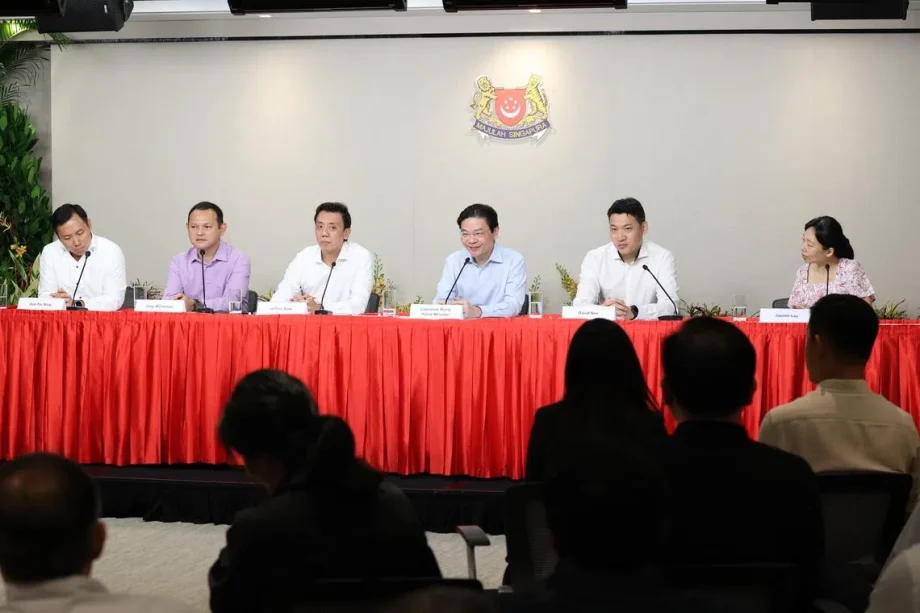
Jasmin Lau, who was one of six senior civil servants fielded by the PAP in the 2025 General Election, will take on the role of Acting Manpower Minister. This comes alongside her promotion to Senior Minister of State for Digital Development and Information.
Labour chief Ng Chee Meng, who has been NTUC secretary-general since 2018, will return to Cabinet as Minister in the Prime Minister’s Office.

Read Full Article At Source