
Singapore and Singaporeans have rarely needed much persuasion to adopt new workplace technology. Cloud services, mobile computing and online collaboration tools quickly became part of everyday work, supported by strong digital infrastructure and a workforce used to adapting.
Artificial intelligence is following a similar path, but at a much faster pace. It is also fundamentally changing the way we work. Earlier technologies altered how information was stored, accessed and shared. AI is beginning to shape how work itself is researched, reasoned through, produced and improved. Employees are using it to find information, analyse material, draft documents, generate ideas and automate parts of recurring workflows.
Microsoft’s 2026 Work Trend Index suggests Singapore workers are among the furthest along in this transition. Many are not simply using AI to complete familiar tasks faster. They are producing work they say would have been beyond them only a year ago.
Singapore is among the world’s fastest AI adopters
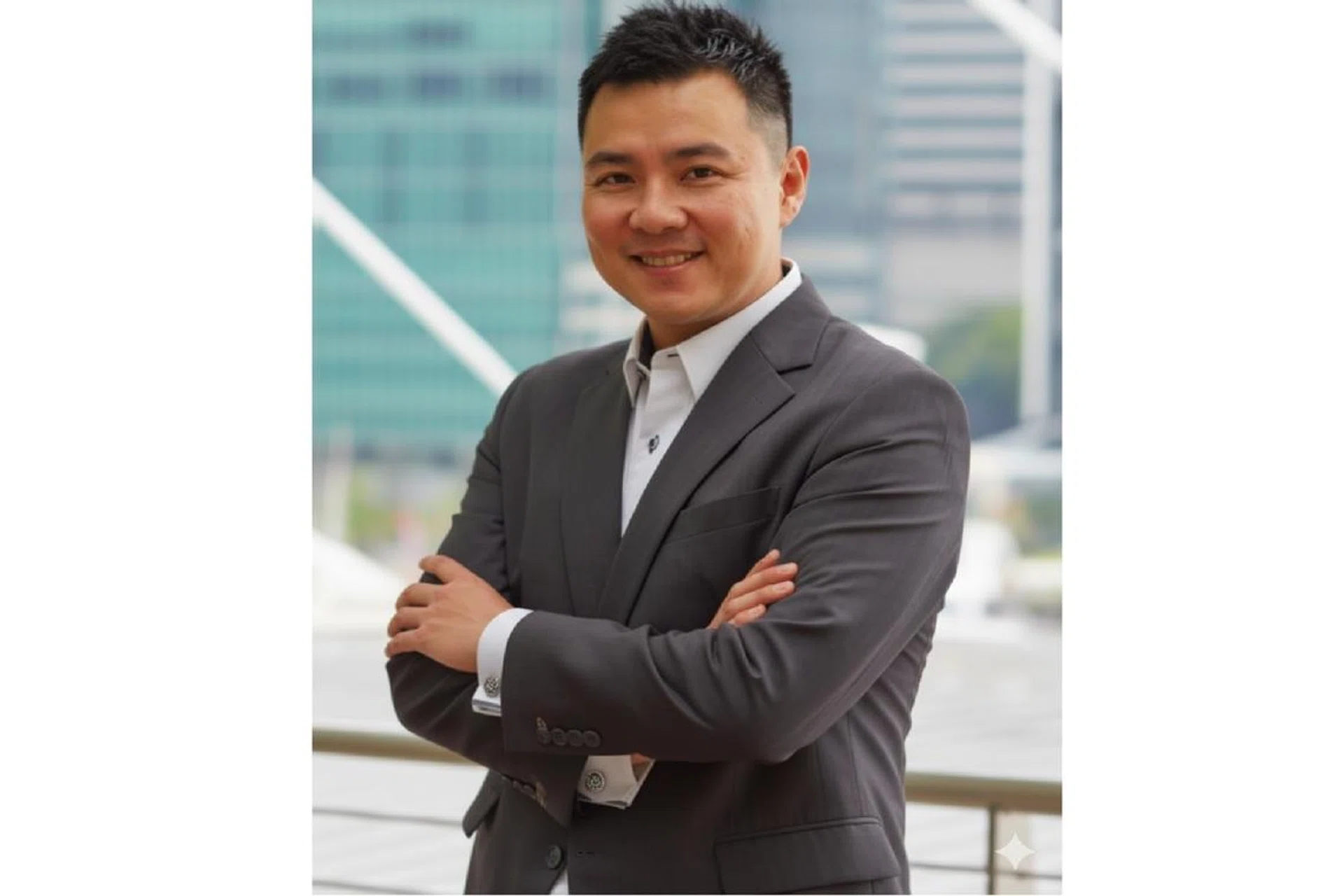
Chia Wee Luen, Managing Director of Microsoft Singapore.
Photo: Microsoft Singapore
Microsoft’s latest AI Diffusion Index places Singapore second globally, with 63.4 percent of its working-age population using AI in the first quarter of 2026.
The country’s occupational structure explains much of that. In a July 2026 brief on generative AI and labour markets in ASEAN, the International Labour Organisation found Singapore records the region’s highest share of workers with more than a minimal degree of GenAI exposure, at 42.2 percent of total employment, against an ASEAN average of 22.9 percent. Singapore also has the region’s largest share of employment in the highest exposure category, at 6.3 percent, compared with 0.3 percent in Timor-Leste. Professionals, managers, executives and technicians account for around 64 percent of employed residents here, concentrated in financial and insurance services, information and communications, and professional services.
Exposure, as the ILO carefully notes, measures only the technical feasibility of AI to automate or assist with tasks. It is not a prediction of job losses. What it does mean is that a larger share of Singapore’s workforce sits in roles where AI can plausibly change the work.
The Work Trend Index offers a closer look at what is actually happening to those workers. It finds that 66 percent of AI users in Singapore say that they are producing work they could not have created a year earlier, compared with 58 percent globally. Among Frontier Professionals, Microsoft’s term for the most advanced workplace AI users, that figure rises to 82 percent.
Chia Wee Luen, Managing Director of Microsoft Singapore, says workers are no longer merely experimenting with the technology.
“Singapore workers are not just experimenting with AI, they are already using it to expand what they can do at work.”
AI has moved rapidly from something discussed as a future technology to a tool embedded in the daily rhythm of work. Across industries, Chia says, the use cases are stacking up healthily:
- Developers are using AI to write code
- Customer service officers are using it to provide more personalised support
- Doctors are using it to reduce administrative work, so they can spend more time having higher-quality conversations with patients
- Employees are also using AI to retrieve information faster, develop ideas more quickly and improve work as it progresses. Research, drafting and analysis that once took hours can now be completed more efficiently, with the technology helping users explore alternatives and reach decisions with greater confidence.
Microsoft’s global analysis of more than 100,000 anonymised Microsoft 365 Copilot conversations found that 49 percent supported cognitive work, including analysis, problem-solving and forms of reasoning that previously required substantial expertise.
For Chia, however, the most important change is not simply speed.
“For the average employee, the biggest shift is not just speed but greater agency,” he says.
Work begins to move away from completing a predetermined list of tasks and towards setting direction, exercising judgement and taking responsibility for outcomes. AI can assist with execution, but employees still decide what needs to be accomplished and whether the result is good enough.
“As AI takes on more execution, employees can focus more on judgement, direction-setting and outcomes,” Chia says. “In many ways, AI is raising the ceiling on human ambition.”
What makes someone a Frontier Professional?

A frontier professional uses AI and AI agents to handle complex, multi-step tasks.
Photo: Pexels
A frontier professional is an advanced AI user who routinely collaborates with artificial intelligence and AI agents to handle complex, multi-step tasks.
The difference between a regular AI user and a Frontier Professional is not necessarily how often they use the technology. It is how deeply AI has been integrated into their work.
Frontier Professionals are more likely to delegate complex tasks to AI agents, build repeatable AI-assisted practices and redesign workflows around the technology’s capabilities. They also understand when to refine or reject an output and when human judgement must take precedence.
Microsoft describes a wider shift in which work increasingly begins with existing signals and context instead of a blank page. Its agentic tools can perform multi-step actions within documents, spreadsheets and presentations, moving beyond answering questions to helping complete the work itself.
That does not make the employee a passive observer. More capable AI places a greater burden on the user to define the right objective, identify weaknesses and judge whether the result meets the required standard.
Singapore’s findings indicate that most users understand this. Some 88 percent say they remain responsible for the thinking when using AI, slightly above the global figure of 86 percent. Critical thinking is also the skill Singapore workers most frequently identify as important as AI becomes more deeply embedded at work, cited by 52 percent of respondents.
Chia considers the 88 percent figure one of the study’s most encouraging results because it suggests adoption remains human-led.
“While people are embracing AI, they also recognise that they are ultimately responsible for the thinking and decisions behind the output,” he says.
A strong result is rarely produced through a single instruction. It requires users to review, question and refine what the system produces, much as they would assess work prepared by a capable colleague.
“In the hands of someone with expertise and good judgement, AI becomes a force multiplier that accelerates analysis, boosts productivity and enhances the quality of work,” Chia says. “The real opportunity isn’t simply using more AI, but using it thoughtfully and responsibly.”




Read Full Article At Source