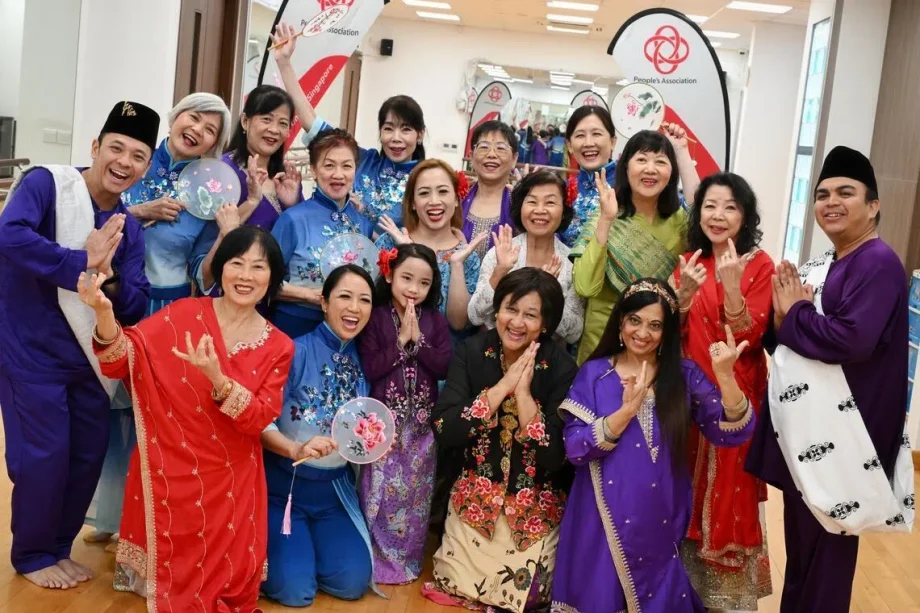
SINGAPORE – When the music started, the dancers swayed in unison, laughing and encouraging one another as they performed the Malay dance moves.
Minutes later, the music changed, and the group seamlessly transitioned into an English dance.
What began as an interest group to promote Malay dance has now evolved into a showcase of multiculturalism – among its members and in the art forms they are learning.
Events organiser Seriwati Salim, 46, started the interest group in 2023 under the Toa Payoh West Community Club Malay Activity Executive Committee with just four members.
After people from other races asked if they could join the group, it evolved into a multicultural dance troupe with more than 40 members aged seven to 73.
Today, about half the members are Chinese, with about 30 per cent of the group Malay, 20 per cent Indian and two from Africa.
Most are women, with only four men so far. They come from across Singapore, including Woodlands and Jurong.
For them, racial harmony is not just a concept to be observed on July 21 yearly, but part of their lived experience throughout the year.
The group is called Lentera Tari (dance lantern in Malay) “because lanterns are used in Malay, Chinese and Indian culture”, said Seriwati.
It performs almost every month at grassroots events, festive celebrations and National Day functions, dancing to Malay, Chinese, Indian and English songs.
Off the stage, members bond over meals, birthday celebrations and festive gatherings after their Tuesday and Sunday practice sessions.
Seriwati also invites members from different ethnic backgrounds to help choreograph dances from their own cultures.
“It’s a bit of a challenge coordinating members from the different ethnic groups, but for those who cannot understand English, the rest will help translate,” she said.
“Dance is a universal language. When the music plays, we just have fun,” she added.
To her, the dance group is a platform for all to learn more about each other’s culture.
It is all right even if they forget their dance steps occasionally during performances.


Read Full Article At Source