Homer’s Odyssey is one of the oldest stories known to man, so old that the circumstances surrounding its authorship – who Homer was, when the stories were penned – form their own genre of historical inquiry. But what’s not a Homeric Question is how highly regarded the Odyssey as a story is; many of its themes and motifs remain relatable despite the thousands of years of human progress, and the hundreds of translations the Greek tale has received in as much time.
Christopher Nolan’s The Odyssey is the latest in the pantheon of retellings. To hear the director talk about the film, there’s a certain reverence for the legend and its sheer scale. And yet, Nolan decided against a word-for-word adaptation (I’d still be in the theatre if that were the case), nor did he opt for a simple abridgement of the tale. Instead, The Odyssey is best described as a re-interpretation of the poem.
Matt Damon plays Odysseus, King of Ithaca, who is known within Homer’s story for his cunning, pride and moral ambiguity. But just as adapting the entirety of the Odyssey would be a tall task, so too would adapting all facets of Odysseus’s character. Instead, Damon cuts a straightfowardly tragic figure; a war-weary but still prideful warrior who, against all odds, seeks to secure homecoming not only for himself but for as many of his doomed men as possible, occasional defiance of the gods notwithstanding. I can’t say that he convinced me of Odysseus’s intellect, but Damon slips into the archetype of a tired soldier with ease.
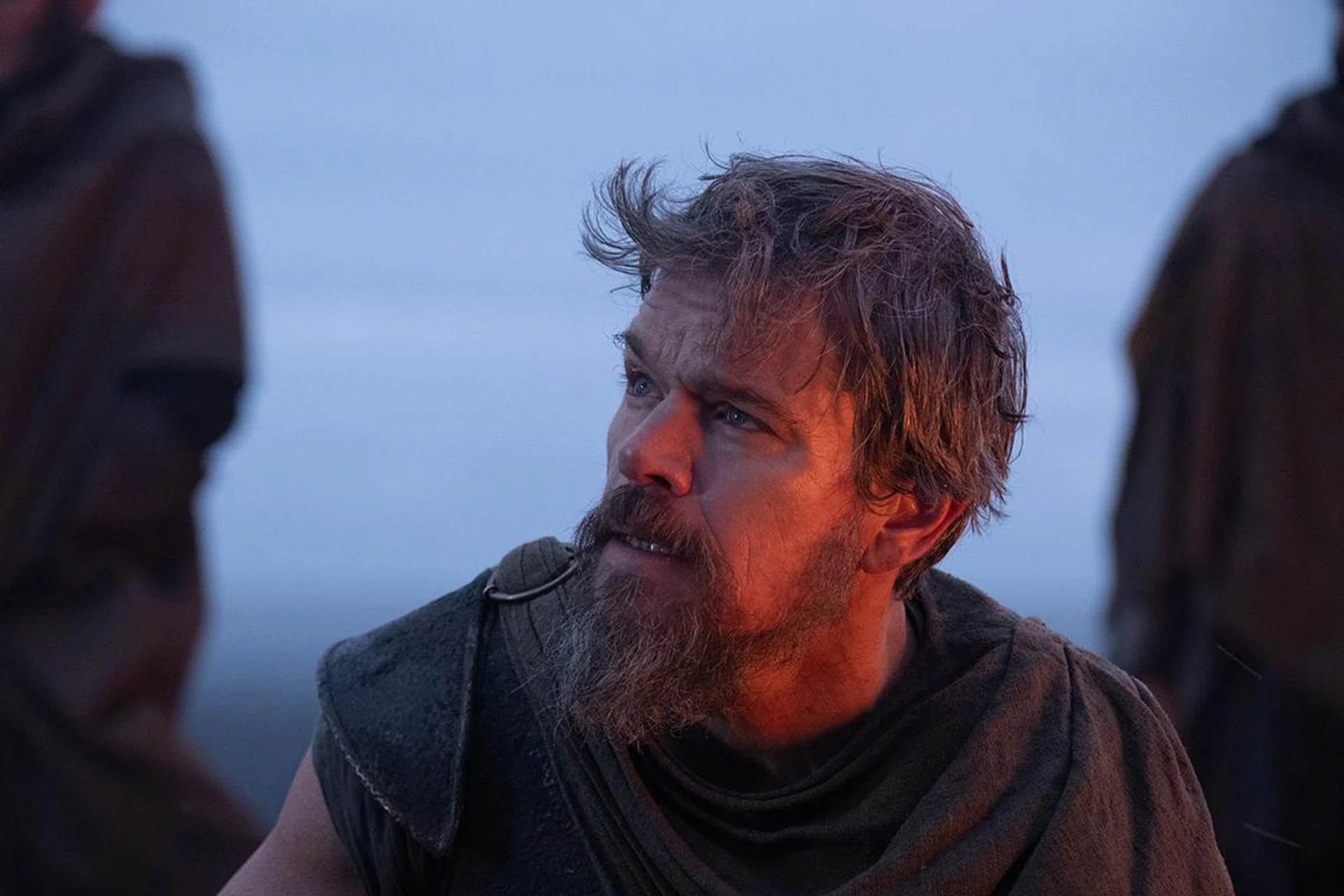
Matt Damon stars as Odysseus, with Nolan’s signature tragic bent.
Image: Universal Pictures
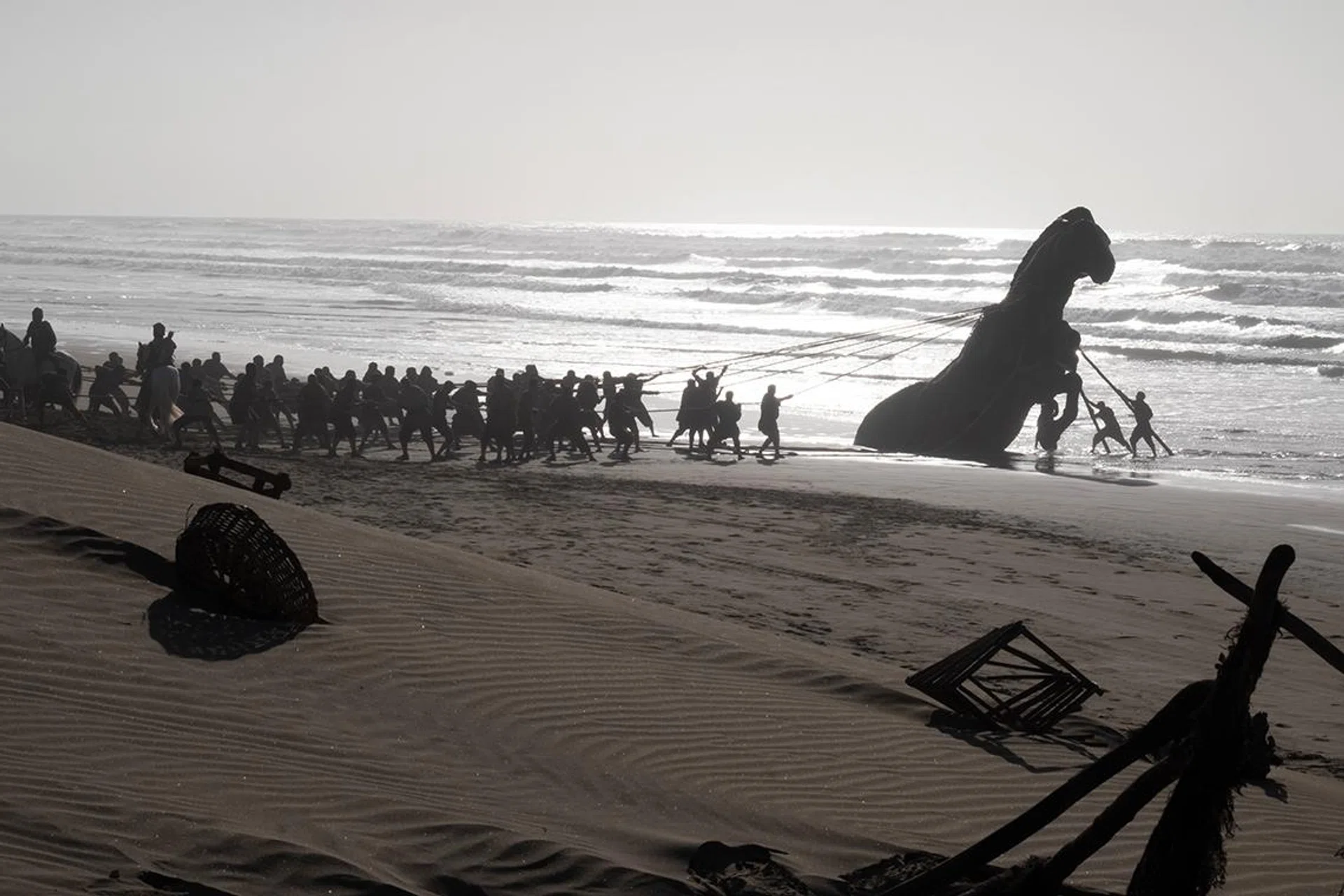
It’s this war-weary lens that Nolan chooses to re-interpret Homer’s Odyssey through. Without giving too much away, one of the major changes compared to the typical story was the significance of the Trojan Horse, and Odysseus’s involvement with it. The savageness in the sacking of Troy, of the decade-long Trojan War in general, is very much a focal point in the film – visually, as we see that magnificent Troy set getting burned down in gripping battle sequences, but also thematically.
Homer’s Odyssey is a story set during the collapse of Bronze Age Greece. Nolan manifests that within The Odyssey by depicting a growing rot and decay in the film’s Mycenaean society, a feeling which is palpable through the writing and acting (at least from the major cast). Between the brutal sack of Troy, the threat of an invasive ‘People of the Sea’, and the abuse of Zeus’s Law by the boorish suitors – led by Robert Pattinson’s Antinous, who is as slimy and snivelling as they come – you can feel that the world these characters live in, and all the norms that sustain it, is in decline.
Read Full Article At Source