
What happened?
The Singapore T-bill yield has been steadily rising over the past few months.
The latest yield on the 6-month Singapore T-bill reached 1.55% in the latest 6-month T-bill auction.
Likewise, fixed deposit rates in Singapore have also started to climb higher again.
This has sparked some discussion in the Beansprout community about where is the best place to park cash for higher yields.
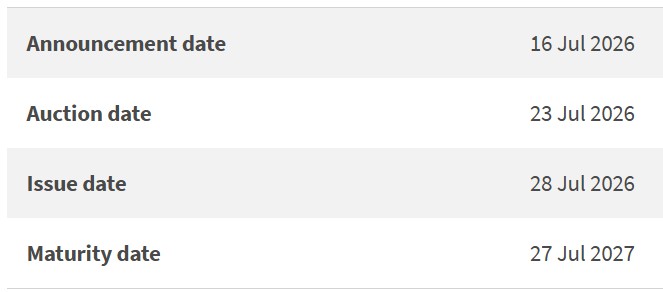
In this article, I will I will be looking at some of the latest indicators to find out if it is worthwhile applying for the upcoming 1-year Singapore T-bill auction (BY26102T) on 23 July 2026, and how it compared to the 6-month Singapore T-bill and fixed deposits.
What is the likely yield on the 1-year Singapore T-bill?
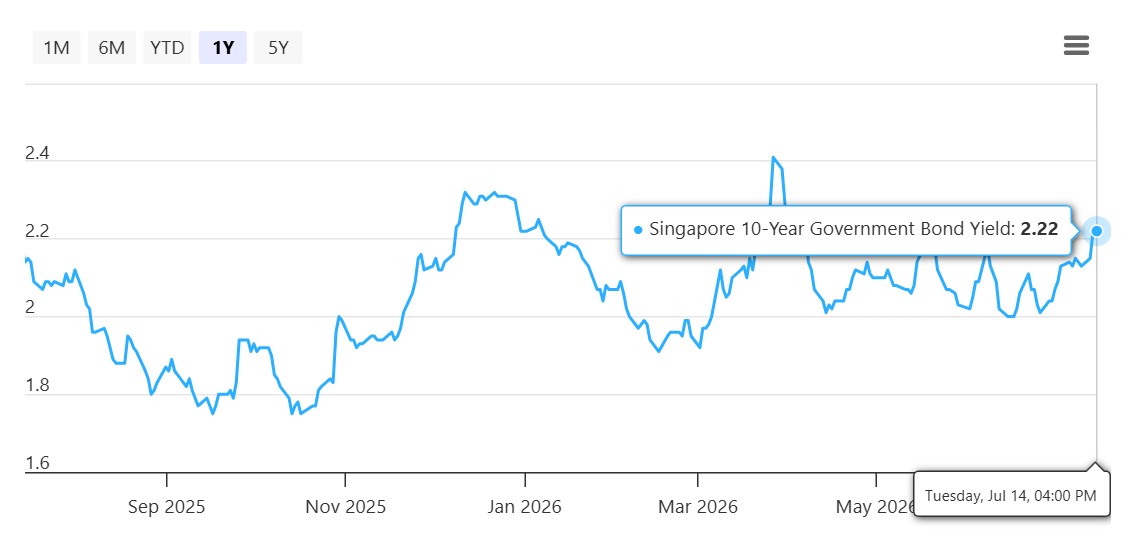
Like the 6-month Singapore T-bill yield, the 10-year Singapore government bond yield has fluctuated in recent months.
After falling to around 1.75% in September 2025, the Singapore 10-year government bond yield climbed to about 2.41% at the end of March 2026 amid heightened Middle East tensions and concerns that higher oil prices could add to inflation.
The yield subsequently eased before rising again to about 2.22% as of 17 July 2026.
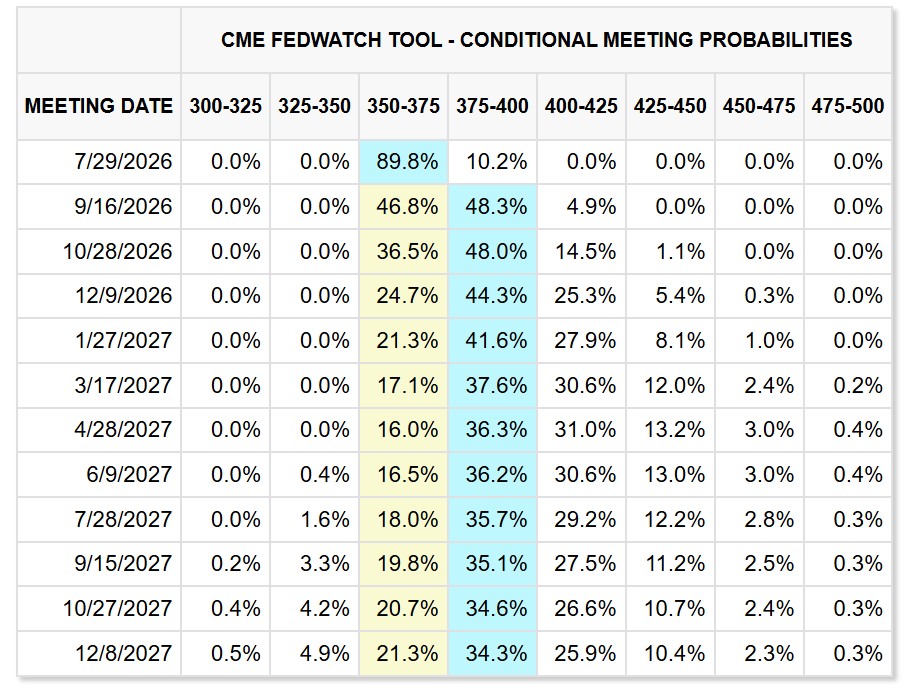
These movements reflect changing expectations for US interest rates and inflation, as well as shifts in demand for government bonds amid geopolitical uncertainty.
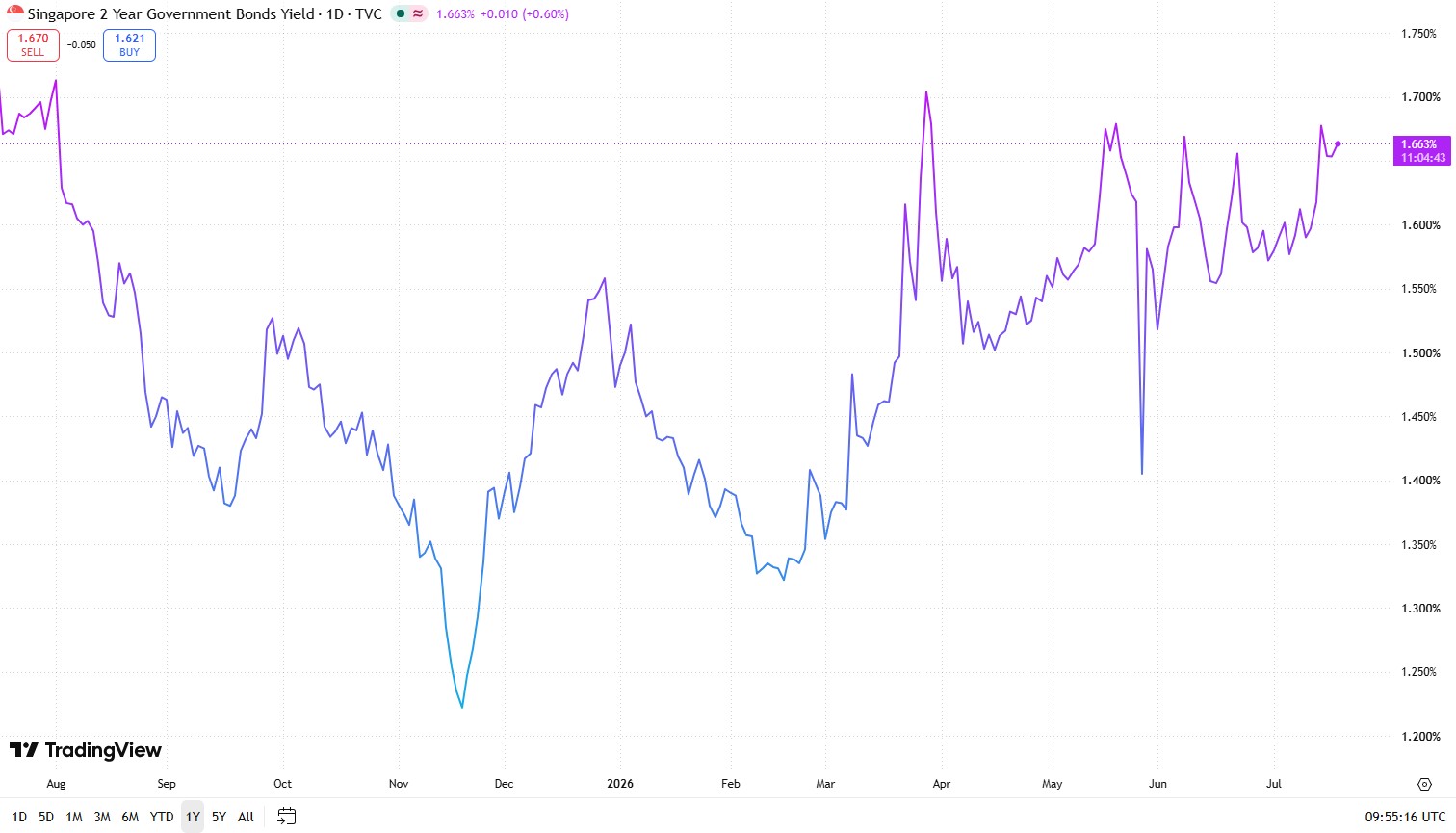
Likewise, we have seen less significant movements for the 1-year Singapore T-bill yield.
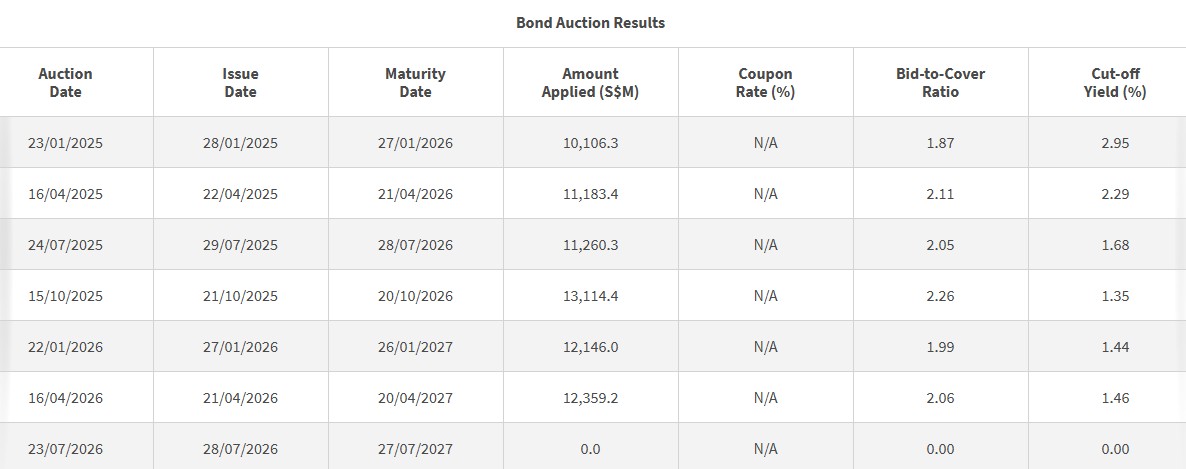
The closing yield on the 1-year T-bill was 1.45% as of 17 July 2026, hovering near the 1.46% cut-off yield seen in the April 1-year T-bill auction.
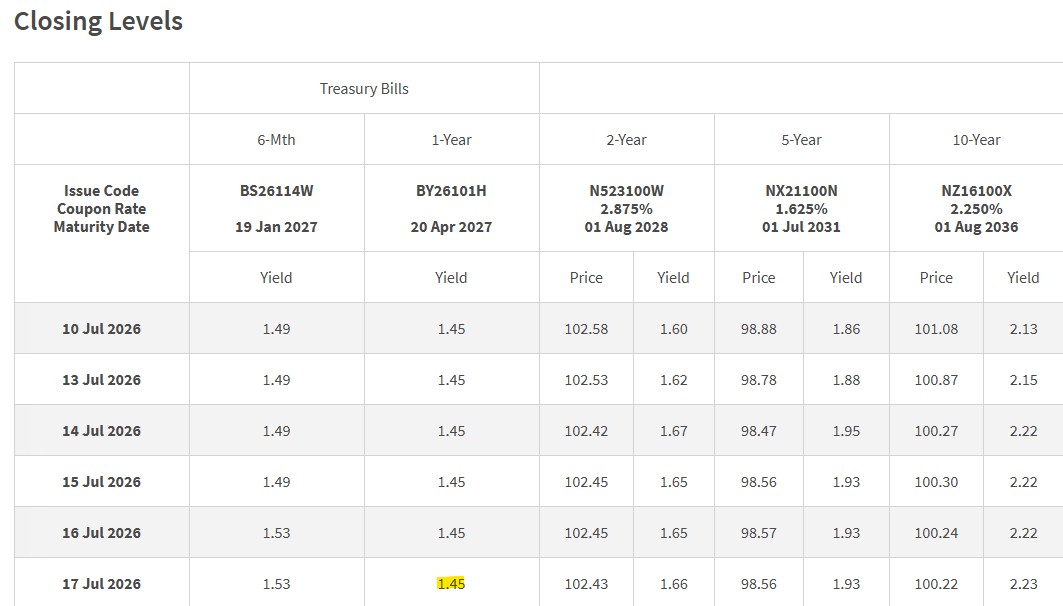
However, it is worth noting that the eventual cut-off yield in the auction may differ from the closing yield, as it will depend on the bids in the auction.
From the past few rounds of the 1-year T-bill auctions, we can see that demand for the T-bill has been fairly elevated.
This has put pressure on the cut-off yield of the 1-year T-bill.
Buying Singapore 1-year T-bill – better than 6-month T-bill?
Rather than applying for the 1-year T-bill, one option to consider is to invest in two consecutive tranches of 6-month T-bills.

Read Full Article At Source