SINGAPORE – Singapore’s newest heritage trail, covering areas rich in colonial-era legal history, is the first of its kind to explore how the rule of law has shaped not only national development, but also the everyday lives of Singaporeans.
This year marks SGLaw200, the bicentennial of Singapore’s modern judicial system, which was established through the Second Charter of Justice in 1826.
To commemorate the milestone, the heritage trail, titled In Place and Progress: Tracing the Rule of Law Through Singapore’s Legal Landmarks, will be open to the public from July 11 until the end of the year.
The trail, developed in collaboration between the Ministry of Law and HeritageSG, features 20 landmarks that are integral to Singapore’s legal evolution.
The free guided walking tour covers nine of these sites, while all 20 landmarks can be explored through an interactive virtual guide at https://sglaw200explore.sg.
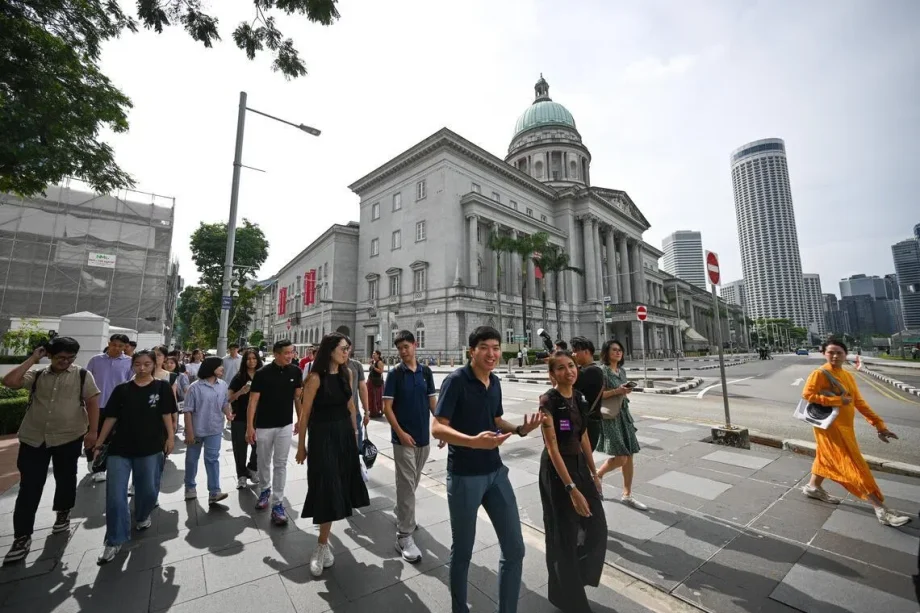
The tour begins at the National Gallery Singapore, which housed the Supreme Court for more than 60 years and witnessed significant legal reforms, including the abolition of jury trials in 1969.

The tour begins at the National Gallery Singapore, which housed the Supreme Court for more than 60 years.
ST PHOTO: SHINTARO TAY
Visitors can also learn about a time capsule that is placed under the foundation stone of the former Supreme Court building and that contains historical newspapers dating back to 1937 and Straits Settlements currency.
Another highlight of the trail is The Arts House at the Old Parliament, arguably Singapore’s oldest surviving government building.
While sitting in the original seats of the former Cabinet, visitors can learn how the building has housed all three branches of government at different times in its history – the legislature, which makes the law; the executive, which administers the law; and the judiciary, which interprets the law through the courts.


Read Full Article At Source