NVIDIA RTX Spark: AI laptops for Windows PCs

NVIDIA RTX Spark: AI laptops for Windows PCs


  1. 1. The Windows PC industry is searching for its next big idea
  2. 2. The case for AI-first laptops
  3. 3. A new identity for Windows PCs

The Windows PC industry is searching for its next big idea

If there is one problem facing the Windows PC industry in 2026, it is that laptops have become almost too good.

What I’ve just said might sound like a strange criticism when modern notebooks are faster, thinner and more efficient than anything that came before them. Intel and AMD continue to deliver meaningful improvements with each new generation, battery life is no longer the constant source of anxiety it once was, and premium Windows laptops now rival Apple’s MacBooks in build quality, displays and overall refinement. Yet for all those advances, it has become increasingly difficult to point to a breakthrough that genuinely changes what a Windows PC is capable of doing. The reality is that most of today’s laptops are selling incremental improvements. A new processor might shave a few minutes off a render time at Handbrake. A larger battery might allow you another hour or two to work on that deck. An OLED display might make your games look awesome.

All of those things matter, but they do not fundamentally change the relationship between you and your laptop. In many ways, the industry has spent the last few years perfecting the traditional laptop while simultaneously searching for the next reason people should care about buying one.

Artificial intelligence has quickly become the industry’s preferred answer to that problem. Over the past two years, practically every major PC manufacturer has unveiled some variation of an AI PC strategy, promising a future where local AI processing helps users work more efficiently, create content more quickly and interact with software in entirely new ways. Microsoft has arguably pushed hardest in that direction through its Copilot+ PC initiative, positioning a new generation of Windows devices around dedicated AI acceleration hardware and software experiences that can run locally rather than relying entirely on cloud services. Whether those early features have lived up to expectations is another discussion entirely, and I won’t go there in this article. But Microsoft’s efforts have at least established one thing: the next major battle for the PC industry is unlikely to be fought over clock speeds and core counts alone.

That shift also created an opportunity for Qualcomm. When the company launched its Snapdragon X Elite platform, it represented the most serious attempt yet to bring Arm-based computing into the Windows mainstream. For years, Windows on Arm had existed in an awkward middle ground where the technology showed promise but never quite felt it was ready for widespread adoption. Snapdragon X Elite changed that narrative. Battery life was genuinely impressive, performance was competitive and Microsoft’s software compatibility efforts finally reached a point where most users could realistically consider an Arm-based Windows laptop without immediately worrying about x86-coded software compatibility – or the lack of it. The platform received generally positive reviews (disclaimer: including yours truly) and demonstrated that Windows on Arm could work as a viable alternative to traditional x86 systems.

Looking back, Qualcomm’s biggest achievement may not have been the Snapdragon X Elite itself. It may simply have been making Windows on Arm feel and work as Windows on x86 would. Think about it: Two years ago, the idea of buying an Arm-powered Windows laptop raised so many questions. Would your day-to-day software from Adobe and Office work normally? Today, those concerns have largely faded into obscurity. Snapdragon X Elite may not have triggered a mass migration away from Intel and AMD, but it did something arguably more important: it convinced developers, consumers and even Microsoft that Windows on Arm was no longer a novelty. Ironically, that groundwork may ultimately benefit NVIDIA more than Qualcomm.

That brings us to RTX Spark. Announced at Computex 2026, NVIDIA’s new platform represents the company’s most ambitious attempt yet to move beyond graphics processors and into the broader personal computing market. It would be easy to dismiss RTX Spark as simply another attempt to make Windows on Arm happen. After all, we’ve been here before. Qualcomm spent the better part of two years trying to prove that Arm-based Windows laptops could stand alongside traditional x86 machines without compromise. The difference is that NVIDIA is not really selling Arm. Arm just happens to be the technology underpinning RTX Spark. What NVIDIA is actually selling is AI. More specifically, it is selling the idea that future PCs will increasingly revolve around local AI processing, and that the companies building those PCs need hardware designed around that reality rather than adapting existing platforms after the fact.

Why RTX Spark is different from previous Arm-based Windows PCs
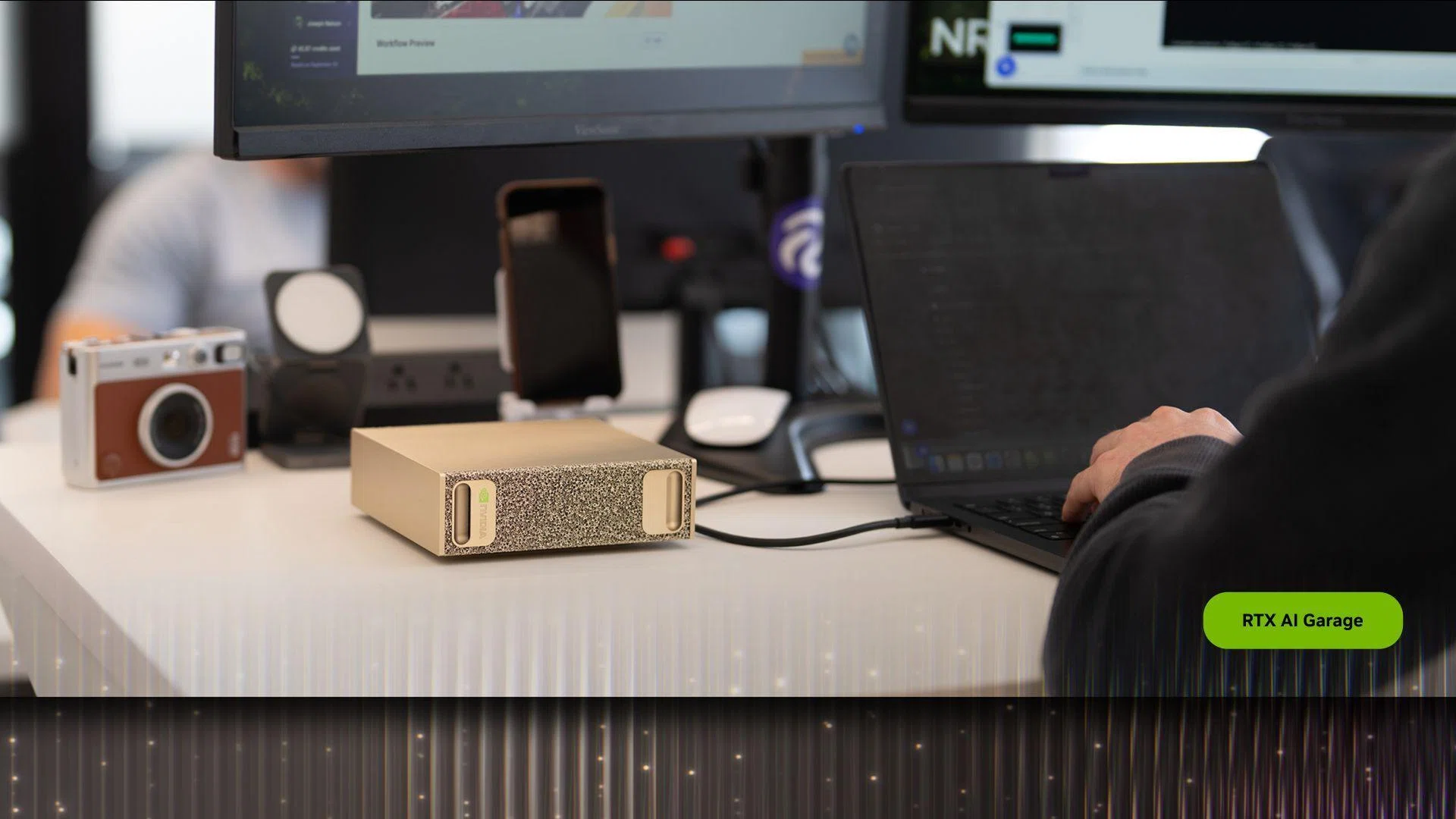
DGX Spark

RTX Spark is in many ways, similar to the DGX Spark launched last year.
Part of what makes RTX Spark interesting is that it didn’t emerge in isolation. At last year’s CES, NVIDIA introduced DGX Spark, a compact AI workstation designed primarily for developers, researchers and organisations experimenting with local AI development. Despite its relatively small footprint, DGX Spark was effectively a miniature AI supercomputer, built to run large language models (LLMs) and AI workloads without relying entirely on expensive cloud infrastructure. It was a fascinating piece of hardware, but one aimed at a fairly specialised audience. Most consumers do not need a desktop AI workstation sitting next to their monitor, no matter how impressive the underlying technology might be.

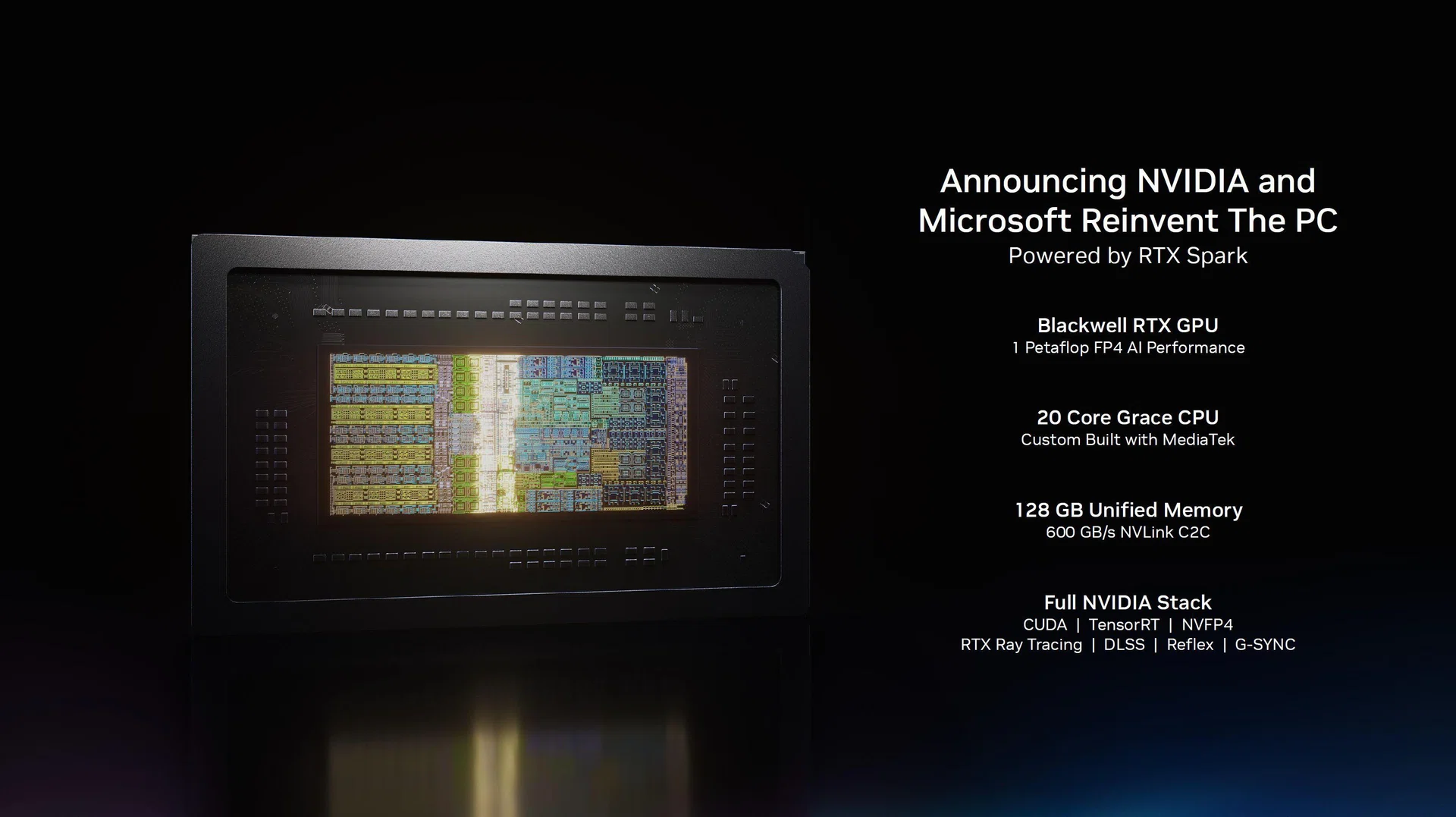
RTX Spark specs

NVIDIA’s RTX Spark specifications.

Image: NVIDIA

RTX Spark takes many of those same ideas and attempts to translate them into something that could eventually reach a much wider audience. The platform combines Arm-based CPU cores, Blackwell graphics technology, unified memory and dedicated AI acceleration into a single architecture designed specifically around AI workloads. On a purely technical level, that makes RTX Spark an interesting evolution of DGX Spark. What matters more, however, is what NVIDIA hopes users will eventually do with it. The company is not pitching RTX Spark as a tool for AI researchers. It is pitching it as the foundation for a new category of AI-first laptops capable of handling workloads that would otherwise require cloud services or significantly more powerful desktop hardware.

But consumers rarely buy technology just on specifications alone. Rather, they buy technology because it enables something they could not do before, or because it allows them to do something more efficiently. A designer is unlikely to care how many TOPS of AI performance a laptop can deliver. What they care about is whether Photoshop runs faster, whether AI-assisted workflows save time, or whether generative tools can run locally without constantly relying on an internet connection. The same logic applies to video editors, software developers, students and business users. The challenge facing NVIDIA is not convincing people that AI matters. It is convincing them that local AI processing matters enough to justify a new category of premium laptops.

This is where NVIDIA may have an advantage that previous Windows-on-Arm efforts lacked. Throughout the history of computing, successful platforms have rarely been built on hardware alone. Software ecosystems matter just as much, if not more. Apple’s transition to its M-series processors succeeded because developers quickly embraced the platform and optimised applications around it. Microsoft’s dominance in personal computing was reinforced by decades of software support. The same principle applies to AI. For better or worse, much of the modern AI industry already runs on NVIDIA technologies. From cloud providers and research institutions to start-ups and enterprise software vendors, NVIDIA’s CUDA platform has become deeply embedded within the broader AI ecosystem.

That existing momentum could prove far more important than any benchmark figure NVIDIA chooses to advertise. Qualcomm entered the Windows market with capable hardware but relatively little influence over the AI software landscape. NVIDIA arrives with years of developer relationships and an ecosystem that many AI-focused companies are already building around. Instead of asking developers to embrace an entirely new framework, RTX Spark extends technologies they are already familiar with. That does not guarantee success, of course, but it does mean NVIDIA starts from a very different position than most companies attempting to introduce a new computing platform.

The case for AI-first laptops

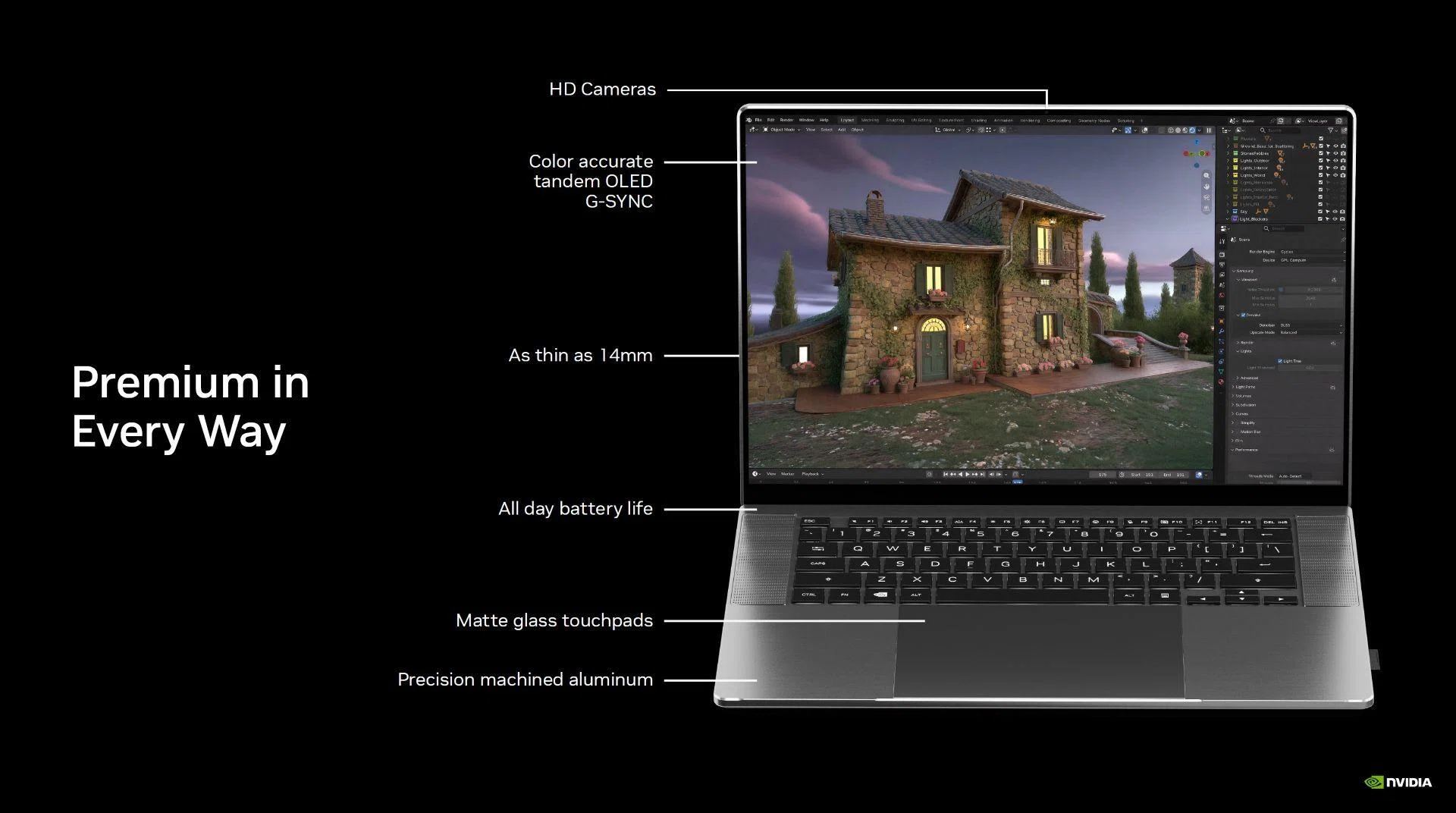
RTX laptop specs

First-generation RTX Spark laptops are expected to have similar base specifications.

Image: NVIDIA

Whether people actually want AI-first laptops remains an open question.

Anyone who has spent time using today’s AI tools knows they can be impressive one moment and frustratingly unreliable the next. The technology is improving at an extraordinary pace, but it is still far from the autonomous digital assistant that science fiction – and NVIDIA’s CEO Jensen Huang – has spent decades imagining. That is partly why NVIDIA’s vision feels both ambitious and slightly premature. Jensen talks extensively about AI agents rather than AI assistants, describing a future where software can understand context, move between applications and perform tasks on behalf of the user. It is a compelling idea, but it is also one that depends on AI systems becoming significantly more capable than they are today.

At the same time, it is difficult to ignore the direction the industry is moving. Microsoft, Google, OpenAI, Anthropic and practically every other major AI company are investing heavily in agent-based systems. Whether they ultimately call them agents, assistants or something else entirely is almost beside the point. The broader trend is clear. AI is gradually shifting from being a tool that answers questions towards becoming a system that can actively participate in workflows. NVIDIA is essentially betting that future PCs will need enough local AI performance to support that transition. The company may be early, but it is no longer alone in making that prediction.

Consider how many daily computing tasks involve moving information between applications. A user researching a topic may switch between a browser, note-taking application, spreadsheet and presentation software. A content creator might move assets between editing tools, cloud storage services and project management platforms. Much of that work is repetitive rather than creative. NVIDIA’s vision is that future AI systems will increasingly help automate those processes, reducing the amount of manual effort required to organise information and complete routine tasks. For those experiences to feel responsive, however, they need access to considerable computing resources. Sending every request to the cloud introduces latency, recurring costs and privacy concerns. Local AI processing offers a potential alternative. The push towards local AI is not happening in isolation either. Over the past year alone, we’ve seen enterprises, governments and individual users become more conscious about where their data is processed and stored. That does not necessarily mean everyone will abandon cloud-based AI services, nor is NVIDIA suggesting they should. What it does mean is that the ability to run more AI workloads locally is becoming a more attractive proposition than it was even a few years ago. For businesses handling sensitive information, local AI processing offers obvious advantages. For consumers, it may eventually mean faster response times, lower reliance on subscriptions and greater control over personal data. These are practical benefits that extend beyond marketing buzzwords.

The bigger question is whether RTX Spark is arriving at exactly the right moment or slightly ahead of its time. There is a reasonable argument for both positions. On one hand, many of the AI-driven workflows NVIDIA envisions remain in their infancy, and consumers may not yet feel compelled to pay a premium for hardware designed around capabilities they are only beginning to explore. On the other hand, waiting until those use cases become mainstream would likely leave manufacturers scrambling to catch up. Technology companies have often found success by arriving slightly ahead of demand rather than reacting once a market is already established – just look at Apple. RTX Spark feels very much like a bet on where computing is heading rather than where it currently stands.

A new identity for Windows PCs

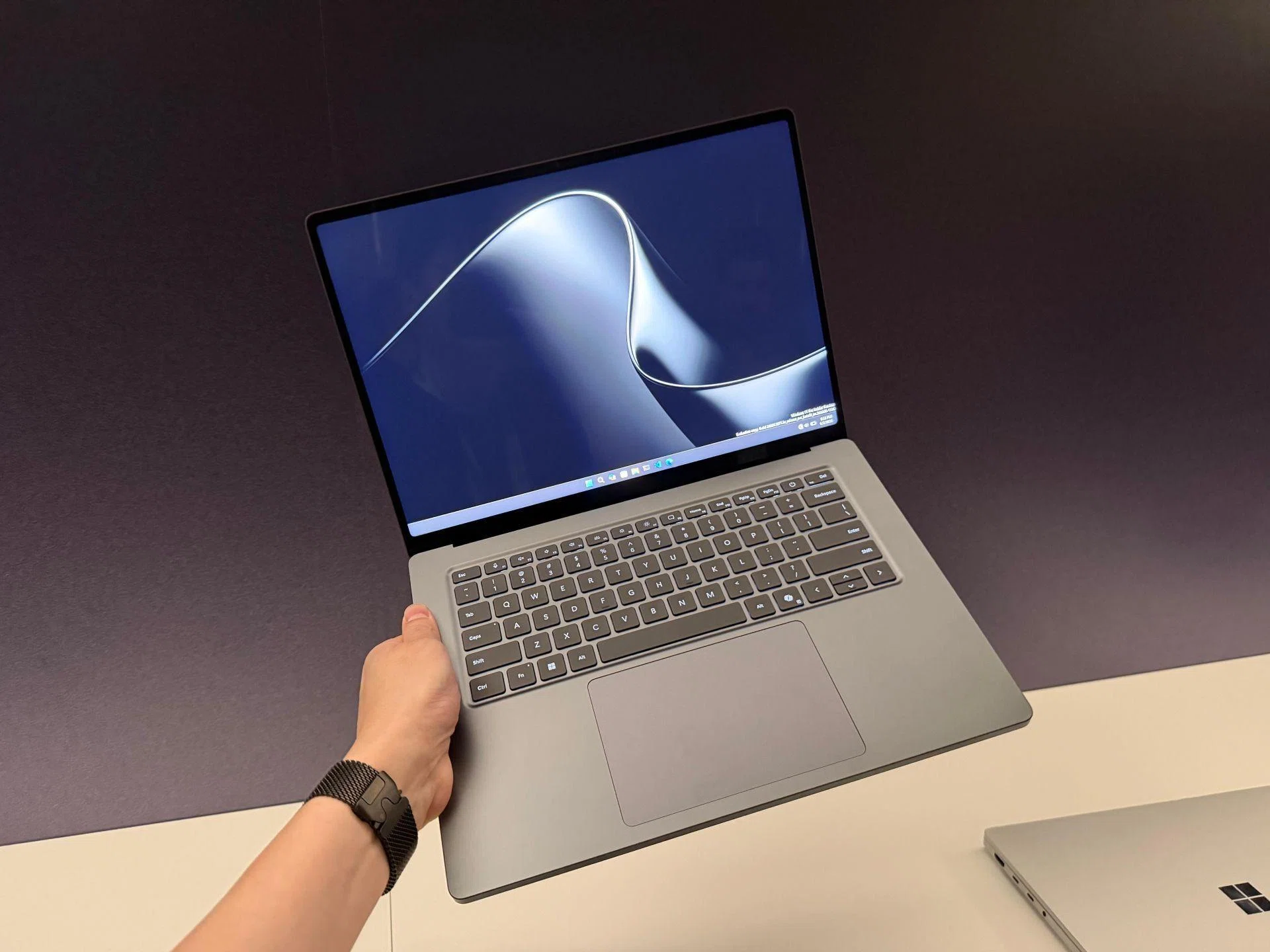
Surface Laptop Ultra

The Microsoft Surface Laptop Ultra was built from the ground up for NVIDIA’s RTX Spark platform.

Photo: HWZ

Even if NVIDIA’s vision proves accurate, RTX Spark is unlikely to transform the Windows ecosystem overnight. The most obvious obstacle is pricing. Early RTX Spark systems are expected to target the premium end of the market, with manufacturers such as ASUS, Dell, HP, Lenovo, MSI and Microsoft already preparing devices based on the platform and confirmed that these laptops will not sell for cheap. Rather than being mainstream consumer laptops, they will probably appeal initially to developers, creators, enthusiasts and early adopters who can justify spending more on emerging technology. That reality may limit adoption in the short term regardless of how compelling the underlying platform eventually becomes.

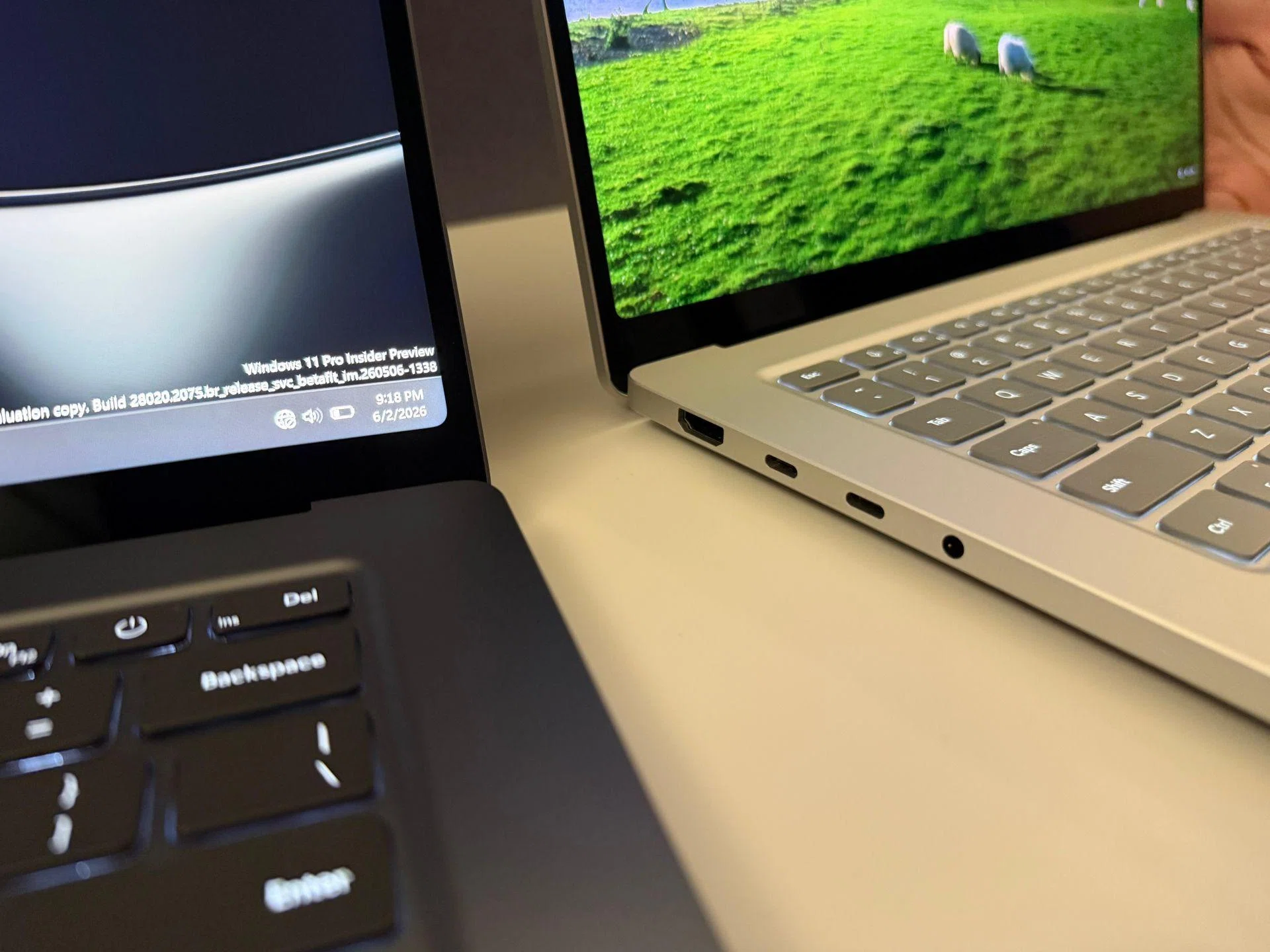
2 colour options

Two colours will be available at launch.

Photo: HWZ

If RTX Spark succeeds, much of that success will likely depend on Microsoft. That may sound obvious, but their laptop Surface brand has historically played an important role whenever Microsoft wanted to showcase a new direction for Windows. Just as earlier Surface Pro laptops helped define the modern 2-in-1 category or the Surface 7 leading the first Snapdragon-powered generation of Windows laptops, the new Surface Laptop Ultra feels positioned as the flag bearer for RTX Spark. My very brief time with it at a private demo during Computex suggests a laptop that combines the polished hardware design Microsoft has spent years refining with a platform built specifically around AI workloads. If there is a laptop capable of convincing consumers that RTX Spark represents something more than another processor launch, it is probably this one.

The thing is, RTX Spark does not actually need to succeed in every area NVIDIA has outlined. AI agents may take longer to mature than expected, local AI workloads may remain a niche interest for years, and some consumers may decide the asking prices simply are not worth it. All of those outcomes are entirely possible. Yet even if only part of NVIDIA’s vision materialises, RTX Spark could still play an important role in shaping where the Windows ecosystem goes next. What the platform offers is something the PC industry has arguably been missing for quite some time: a genuinely new idea. And as I’ve mentioned at the start of this article, laptop launches have largely revolved around faster processors, brighter displays and better battery life. Important improvements, certainly, but rarely exciting ones. RTX Spark suggests a future where PCs evolve around new capabilities rather than better specifications. Whether NVIDIA can turn that vision into a mainstream reality remains to be seen, but after spending the better part of a decade refining the traditional laptop, the Windows PC industry could probably use a little disruption.

RTX Spark-powered laptops are expected to launch in the third quarter of this year onwards. Six laptops from HP, MSI, ASUS, Dell, Lenovo, and Microsoft will be part of the first wave.


Read Full Article At Source

Share. Save. Don't Miss The Buzz: XFacebookRedditLINETelegramWhatsAppGmail