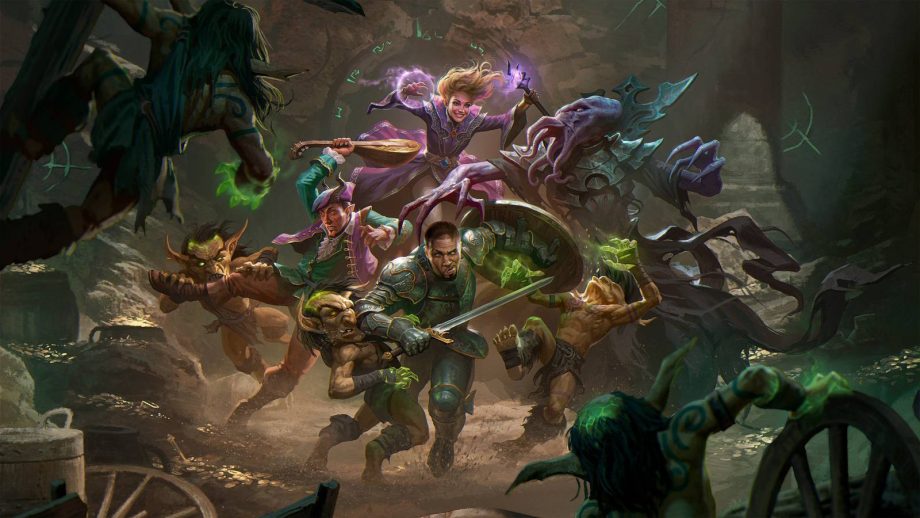
Ravenloft: The Horrors Within is finally available, and Dungeons & Dragons players and Dungeon Masters all over the world are getting ready to venture into the Domains of Dread. There, they will find mind-bending horrors, wretched creatures, and melancholic darklords trapped by their own wickedness; to help players deal with these perils, the book provides ample choice of new and reworked options, from horror-themed subclasses to a new spin on Dark Gifts.
One of these subclasses, the College of Spirits bard, is a 5.5 edition update of the 5e version that appeared in Van Richten’s Guide to Ravenloft. The subclass went through a lot of playtesting, also appearing in an Unearthed Arcana supplement in 2025. Despite its strong flavor, the College of Spirits bard was unfortunately considered a less-than-subpar subclass for bards. In fact, its main class feature, Spirits from Beyond, was so frustrating in its previous incarnation that it almost made a player at my table quit the campaign entirely.
A bard of the College of Spirits has a special attunement to, you’ve guessed it, the spiritual world. The subclass in Van Richten’s Guide actually had a much more interesting description, showing that bards following this path seek the power inherent to stories; they literally bring tales to life. It wasn’t very horror-coded, but it’s still more captivating than the current “Bards of the College of Spirits conjure legendary spirits to change the world.” Still, both descriptions stress that the bard has only partial control over these spirits and their powers.

In gameplay, this is reflected in the third-level class feature Spirits from Beyond, which allows the bard to summon one of these spirits. In its original incarnation, this ability required the bard to use one bonus action and spend one use of Bardic Inspiration to roll on a table and determine a random effect. These varied from damaging enemies to boosting allies, but they could not be activated immediately. Instead, the bard had to use an action to do so, retaining the “spirit tale” in mind until that moment, or until they used this feature again.
It was not the most effective class feature, to say the least. During my long Rime of the Frostmaiden campaign, one of my players multiclassed in warlock and bard, with a specialization in College of Spirits for the latter. However, the lackluster features of the subclass caused them endless frustration.
It was even more disappointing because the progression of the character was perfectly aligned with the roleplay and the campaign’s story. They started as a warlock pretending to be a bard to hide a connection with a dangerous patron. The rest of the players weren’t aware of this, causing hilarious shenanigans every time they asked for a Bardic Inspiration boost. At one point, however, the character distanced themselves from the evil patron and “graduated” to a fully fledged bard, only for all that world to yield lackluster gameplay results. Every time there was combat, the player got so frustrated that in the end they almost wanted to kill the character off to build a new one, but some great rolls of a DM’s most important skills, persuasion and diplomacy, convinced them to stick with it.



Read Full Article At Source