God of War Laufey Feels Too Similar to Kratos’ Norse Saga

God of War Laufey Feels Too Similar to Kratos’ Norse Saga


This is an IGN opinion piece from writer Tim Brinkhof, who has been playing God of War for two decades. He thinks the 2018 reboot is majestic. Ragnarok, not so much.

Responses to Santa Monica Studio’s first look at God of War Laufey have been – to put it lightly – mixed. And I, too, have mixed feelings about Laufey, although none of them concern the fact we’ll be playing as Faye rather than Kratos. I actually really like the premise – the idea of Faye exploring an afterlife populated by gods from different religions is fun, full of potential, and vastly preferable to the uninspired Atreus-goes-to-Egypt-for-reasons sequel that I had been expecting. My reaction is largely the same as when God of War 2018 was first announced: I didn’t see it coming, yet cannot imagine a better, more original way for the franchise to move forward.

I am, on the other hand, not sure what to make of everything else. While Laufey’s premise channels the innovative spirit of the 2018 reboot, its gameplay footage evokes the same sense of cold indifference I experienced playing through God of War Ragnarok, where everything that had been fresh and exciting about the reboot was starting to become formulaic and uninspiring. For Laufey to succeed, it should remember what the first Norse game did right, and learn from where the second went wrong.

Of all the online criticisms I’ve seen, the easiest to dismiss are those focussing on Faye’s appearance – they’re anything but genuinely critical, and have nothing to do with the quality of the game. But it’s a little harder to wave away the complaints that take issue with not playing as Kratos, an argument that is based in part on the franchise’s own development history. When work on the 2018 reboot first began, director Cory Barlog and his team briefly considered creating a new protagonist, only to conclude that Kratos was central, and that God of War without him isn’t God of War.

Then again, Laufey isn’t the first to break with this rule. God of War Ragnarok included large segments where you took control of Atreus. Although these weren’t everyone’s cup of tea – I personally found the more agile combat mechanics to be a welcome change of pace to Kratos’ at times frustrating slowness and heaviness – they also didn’t lead to accusations that the developers had betrayed the series’ core DNA.

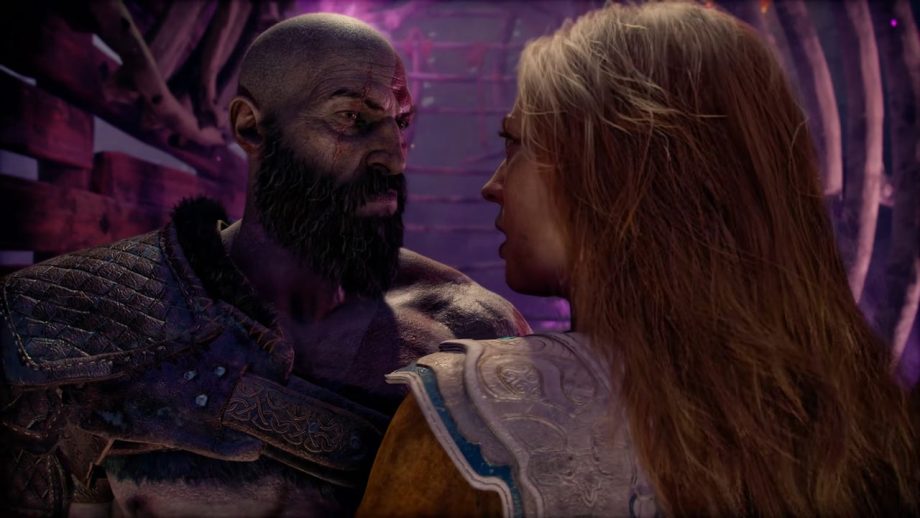
More importantly, you could counterargue that Kratos can still be central without being playable. This certainly seems to be the case for Laufey, which will – it seems – revolve around her looking for ways to assist her husband and son’s journey from the afterlife, without them knowing. Kratos is even shown to appear to Faye during the debut gameplay demonstration. As one Redditor put it: “It’s all about Kratos’ story even when he’s not the MC.”

Another criticism worth hearing concerns the quality of the writing, which many rightly compare to that of Marvel films. I’m not talking about the vague and meritless allegations about Santa Monica Studio’s politics, but the specific, defensible observation that the writing team’s frequent use of snarky dialogue and quirky humor is boring at best and tonally inconsistent at worst, clashing with the seriousness of the action and character development.

As for the others, Phranque the Talking Cube (voiced by The Boys’ Jack Quiad) and Rue the Talking Ribbons (Perlina Lau) are fittingly bizarre follow-ups to Mimir the Talking Head, and their undisclosed identity – Metatron’s Cube? The Sword of Excalibur? – is already a subject of animated speculation. But while their role in this universe arouses my curiosity, their bland, by-the-numbers interactions with Faye – “Focus. You’re here. Be here,” the cube says – put me to sleep.

Possibly Laufey’s biggest problem, at least to me, is that it appears to stick too closely to a design template that I had already gotten tired of well before finishing Ragnarok. Although we’re not quite at that point yet, Santa Monica Studio would do well to remember why its Greek games declined and the 2018 reboot succeeded: its unwillingness (and then willingness) to break from tried-and-tested formulas.

Where the overall newness of 2018 made me feel like I was on a real journey, unsure what lay beyond each corner, Ragnarok felt more like going on a theme park ride I had ridden hundreds of times before, and which despite its enormous size had long since ceased exciting me. Exploring the Everywhen in Laufey should be as jarring as jumping from the Greek games to the Norse ones. Instead, it looks – and seems to play – not too differently from what came immediately before. Looking at the footage, the game’s overly familiar design prevents me from identifying with the shock disorientation experienced by its protagonist.

In complaining about this, I realize that I’m asking for something that probably isn’t economically feasible. Games not only take longer to create than they did in the past, but they’re also exponentially more expensive. As a result, you can’t expect anyone – not even a corporation with pockets as deep as Sony – to develop each of its games completely from scratch, without recycling assets or systems. Still, a developer as accomplished as Santa Monica Studio should be aware of how game design influences game feel, and work around the limitations imposed upon them by executives. Looking at Laufey’s footage, I’m not yet convinced it did this to the best of its ability.

That’s not to say I’m without hope. While Laufey is said to be the start of a new series of games, its real (and realizable) potential lies in its ability to pick up where Ragnarok left off and do what that game failed to accomplish. Because modern development cycles take so much longer than they did in the past, it was decided early to reduce the Norse saga from a trilogy into a duology. This decision heavily compromised Ragnarok’s – well – everything. Especially on replay, it still feels very much like a middle game: the setup to the big finale, rather than the finale itself.

By completing the trilogy, Laufey could fill in the missing pieces, showing us – for example – what becomes of the mask that Odin searched for, and which Sekhmet appears to mention upon meeting Faye as she rips a splinter from her prisoner’s palm. Better yet, it could recontextualize and – ideally – alter Ragnarok’s ending to make it more impactful, both in terms of epicness (Kratos’ battles with Thor hardly hold a candle to his initial fight with Baldur) and emotional payoff.

All of this makes a lot of sense if you think about it. At its core, 2018’s God of War was a game about a grieving family, but in Ragnarok this primary storyline disappeared among all the other things that were going on. Laufey could bring the Norse sage back to where it all started: Faye’s death. Contrary to what its detractors would have you believe, this game is not the product of developers trying to destroy Kratos’ legacy in a politically-driven move to force you to play as a woman. It’s simply the best and most logical way forward. I just hope the actual game will turn out as compelling as it sounds on paper.

Tim Brinkhof is a freelance writer specializing in art and history. After studying journalism at NYU, he has gone on to write for Vox, Vulture, Slate, Polygon, GQ, Esquire and more.


Read Full Article At Source

Share. Save. Don't Miss The Buzz: XFacebookRedditLINETelegramWhatsAppGmail