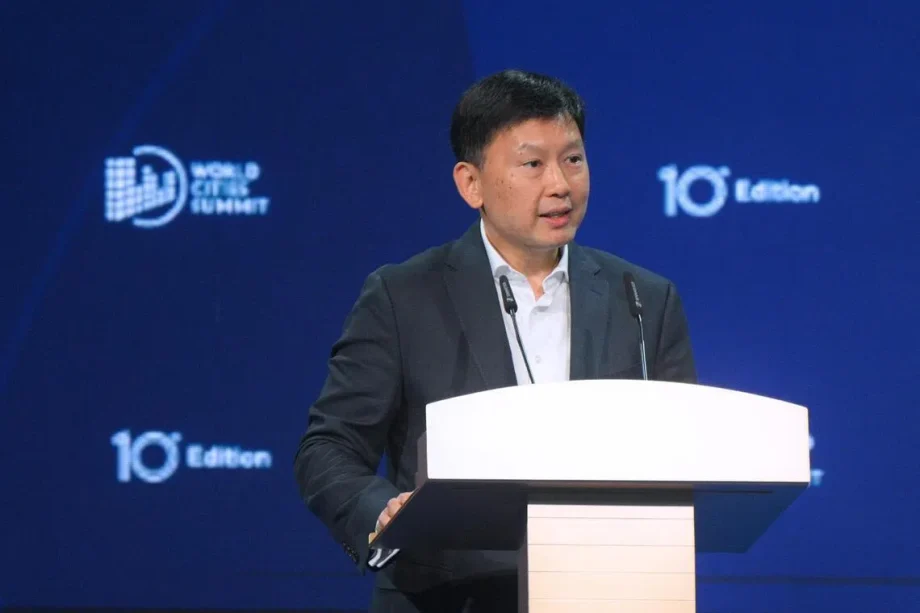
SINGAPORE – Singapore has avoided about $300 million in unnecessary construction costs since 2024 by identifying potential clashes between underground utility projects before any new work begins, Minister for National Development Chee Hong Tat said on June 14.
The effort has seen 272km of underground utility routes undergo such scrutiny.
Underground infrastructure includes water pipes, power cables, telecommunications networks and gas lines. This dense network is owned and maintained by different agencies, and when conflicts go undetected until construction is under way, there can be delays, cost overruns and repeated road openings that inconvenience the public, said Chee.
Having a reliable, shared picture of this complex warren means less exploratory digging and less disruption, he said, speaking at the opening of the World Cities Summit 2026 Mayors Forum.
But this is no easy task, as different utility owners plan, install and maintain their assets separately. Records may also not always be accurate, so contractors often need to carry out exploratory investigations to verify the location of existing utilities before starting works.
The authorities have been tackling this issue on several fronts – through enhanced workflow, non-invasive imaging and better records, for instance. They have also brought together global experts to share experiences that other cities can harness.
The $300 million cost savings are the result of an enhanced workflow put in place by the Urban Redevelopment Authority (URA) since 2024 to identify and resolve conflicts between underground utility projects early, before construction begins.
The workflow has been applied to projects such as the Land Transport Authority’s Tuas Road Viaduct Phase 2 and Changi Northern Road corridor, as well as HDB’s Tengah New Town Phase 4, said URA and the Singapore Land Authority (SLA) in a statement.
In addition, Singapore has deployed non-invasive detection technologies such as electromagnetic locators and ground-penetrating radars to supplement traditional trial trenches, allowing project teams to better map what lies beneath the ground before digging begins.

Singapore has deployed non-invasive detection technologies such as ground-penetrating radars to supplement traditional trial trenches, allowing project teams to better map what lies beneath the ground before digging begins.
PHOTO: HSC PIPELINE ENGINEERING
Trial trenches are narrow ditches dug to determine what lies beneath the surface.
The Government intends to scale up the use of these technologies, Chee said.
The Government is also collecting data and building better digital records of the nation’s underground space, Chee added.

Read Full Article At Source