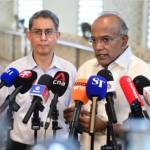
SINGAPORE – Singapore takes a balanced approach to tackle the vast amount of online information, focusing regulatory efforts strictly on issues impacting national and public interest, said Senior Minister of State for Home Affairs Sim Ann.
Noting that it is unfeasible to regulate everything online, Sim said it is also important to have a well-informed public who are on alert for suspicious content that may not align with national interests.
She was speaking as a panellist at a public forum, Holding The Centre: Navigating Online Polarisation, held at Temasek Shophouse and organised by Reach and The Whitehatters, a non-governmental organisation that focuses on community development. The forum was attended by about 100 members of the public, who had group discussions on online polarisation and misinformation on digital platforms.
Sim cited the Protection from Online Falsehoods and Manipulation Act (POFMA), which allows the authorities to issue correction notices to those who spread misleading statements, as necessary.
“We accept that there can be subjective perspectives on many things,” she said, adding that it would be problematic if a statement of fact is contested and not validated.
Nicholas Fang, managing director of strategic communications firm Black Dot, said accurate information may be challenged by algorithms on social media, often built to encourage attention-grabbing and outrageous content to keep users on the platform. The approach often leads to polarisation and misinformation.
However, he added that the authorities cannot adopt an overly draconian view towards social media firms, given their presence as commercial entities here.
One of the participants asked the panellists if the authorities were doing anything about the “manosphere”, which are online communities that promote masculinity and male supremacy.
Saddiq Basha, senior analyst at the International Centre for Political Violence and Terrorism Research, noted an influx of such content, which could lead to males gravitating towards such ideas and even towards violence. He cited the example of youth role-playing as ISIS fighters in their games.

Read Full Article At Source