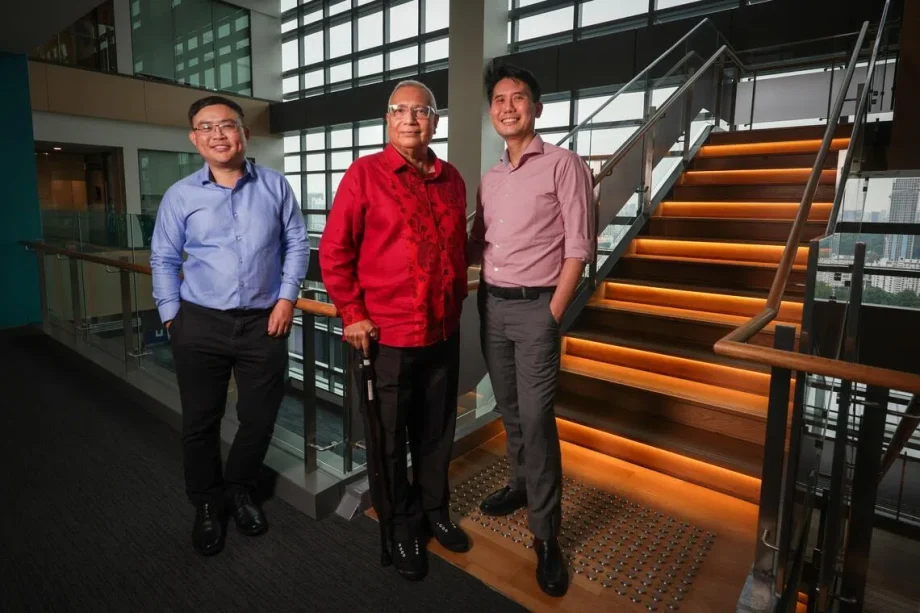
SINGAPORE – Mahamood Ahamed, a grandfather of 12, almost had to give up his place on the waiting list for a liver transplant.
The 69-year-old was diagnosed with end-stage liver disease late in 2025.
Doctors also found a 1.6cm cancerous tumour that could have disqualified him from a liver transplant.
But he found hope in a clinical trial that uses focused ultrasound energy to destroy tumours non-invasively.
In the procedure called histotripsy, ultrasound is used to deliver high-pressure vibrations to targeted tissues, creating tiny gas-filled bubbles that destroy the tumour without thermal energy or high heat, principal investigator of the study Brian Goh told the media on June 11.
“It is the rapid expanding and collapsing of the micro-bubbles that mechanically break apart the tumour, turning it into a liquid state.
“The destruction happens only within what is known as ‘bubble cloud’, leaving the surrounding healthy tissues and organs alone,” said Goh, who heads the department of hepato-pancreato-biliary and transplant surgery at the Singapore General Hospital (SGH) and the National Cancer Centre Singapore (NCCS).
The destroyed tumour in a liquid state is drained from the body through its lymphatic drainage system.
In April 2025, the Li Ka Shing Foundation and Temasek Trust committed $12 million to bring histotripsy to Singapore and donated two histotripsy systems to NCCS and the National University Cancer Institute, Singapore, for trials here and in the region.

Read Full Article At Source