SINGAPORE – There are no major technical roadblocks for the Republic to store its nuclear waste – possibly deep underground – if the country decides to adopt nuclear energy, according to a study by the Singapore authorities and a Swedish company.
The finding was based on a desktop study, which does not include on-site investigations, and future surveys will need to be done to make a comprehensive assessment, the Energy Market Authority (EMA) told The Straits Times.
In 2023, the EMA and the National Environment Agency (NEA) engaged SKB International – a Swedish pioneer in dealing with nuclear waste – to conduct a study to better understand and evaluate the implications of radioactive waste management for a small and densely populated country like Singapore.
While the study was conducted in 2023, it was made public in May 2026 when the Government announced that the Republic will undergo an assessment by the UN nuclear watchdog in 2027 to determine the nation’s ability to make an informed decision on nuclear energy deployment.
Singapore’s capabilities in managing radioactive waste is one of 19 critical areas that the International Atomic Energy Agency will evaluate.
The study provided insights into the best practices for the safe storage and disposal of radioactive waste, said EMA, and comes as Singapore mulls over nuclear power as a clean new energy source.
Nuclear or radioactive waste is a by-product of nuclear power plants. It contains or emits radioactive particles, and can remain hazardous for thousands of years. If not properly managed, it can cause serious damage to human health and the environment.
So it needs to be very carefully disposed of.
Nuclear waste is classified mainly in terms of how radioactive it is and how long it takes for the materials to decay to safe levels. Low-level waste includes items such as gloves and uniforms that are contaminated with small amounts of mildly radioactive materials.
High-level waste refers mainly to used uranium fuel rods that are hot and highly radioactive. The used rods contain radiation-emitting particles, such as plutonium-239 that takes some 240,000 years to decay to lower levels.
The waste must be buried safely in case of contamination. In the past, NASA had contemplated shooting nuclear waste into outer space, but that idea was rejected given the cost and risks of rocket launch failure.
“Radioactive waste management is one of the key considerations in any nuclear power programme, and agencies have been building capabilities to understand global practices and options suitable for Singapore,” said EMA.
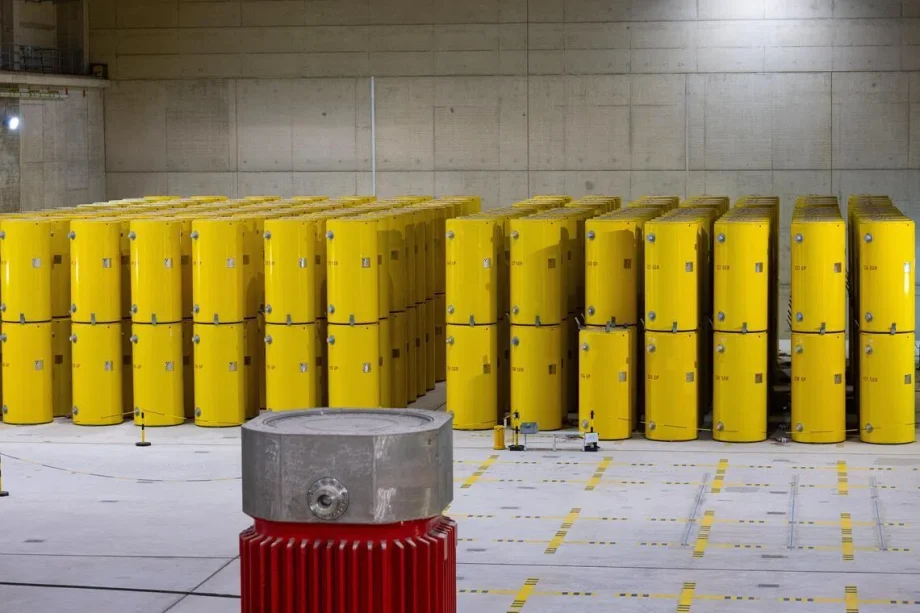
For several decades, in countries that have nuclear power plants, used nuclear fuel rods have been temporarily stored in pools within plants to cool down, or in protective casks awaiting the development of underground storage facilities – man-made networks of underground tunnels about 400km to 800km underground.
Such facilities are called deep geological repositories, which are designed to isolate radiation-emitting particles from living things for hundreds of thousands of years. Several countries such as Finland, Sweden, and France are at various stages of constructing or licensing such facilities, but only Finland has fully built one that is slated to start operations later in 2026.
Read Full Article At Source