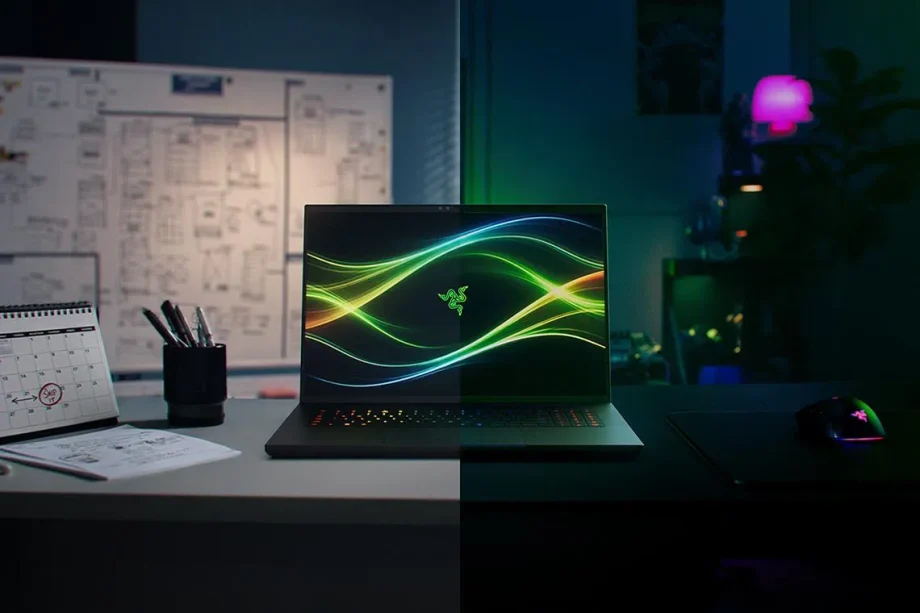
Razer Blade 18: AI dev & gamer powerhouse

Razer Blade 18: AI dev & gamer powerhouse


Razer is doubling down on AI this year, and you can tell when its new Blade 18 laptop, the company’s flagship offering in its notebook lineup, has two different webpages on Razer’s website for both gamers and AI devs.

The Blade 18, so often touted as a desktop replacement by Razer, sees a step up in the CPU department, topping out at Intel’s Core Ultra 9 290HX Plus processor. It’s a logical step to take, with the 290HX Plus having been released earlier this year. It replaces the 275HX that was the top option in last year’s Blade 18 – though that’s still available as the base CPU offering.

The Blade does, however, keep the same graphics options, topping out at an Nvidia GeForce RTX 5090 laptop GPU. The base config starts at an RTX 5070 Ti; keeping it cool is a vapor chamber system and three fans.
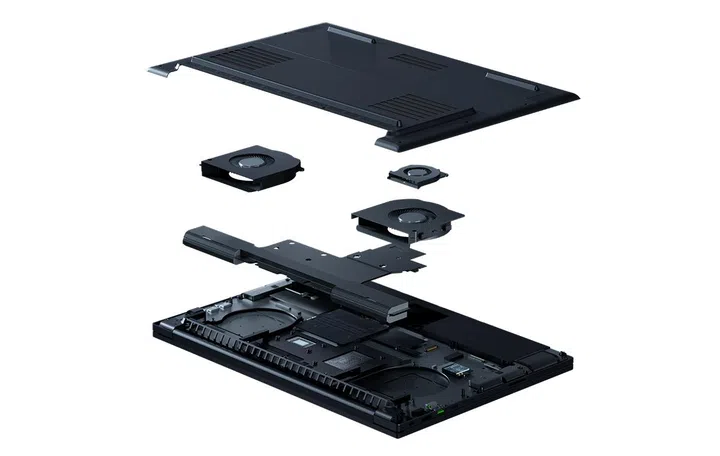
Given the high amount of heat the components will produce, Razer has also fitted a vapor chamber cooling system inside the Blade.

Given the high amount of heat the components will produce, Razer has also fitted a vapor chamber cooling system inside the Blade.

Image: Razer
All this horsepower certainly doesn’t hurt if you’re trying to run LLMs locally. Razer promoted improved benchmark results in AI inference and image generation against its competitors (the company reports a MacBook Pro M5 Max as the control), as well as generating up to 162 tokens per second. 

This is all on an RTX 5090 in a pre-production laptop, however, so performance on the Blade 18 will vary depending on a number of factors, including the workloads and models you’re using.

Outside of its AI credentials, the laptop also retains a number of features that has defined the laptop’s pitch of being a mobile powerhouse: a choice of 32 or 64GB of DDR5 memory, an 18-inch IPS display that can switch between 4K @ 240Hz and 1080p @ 440Hz and is 20% brighter than last year’s, and a 6-speaker system.

Port selection is also pretty extensive; you’ll find separate Thunderbolt 4 and 5 ports, alongside HDMI 2.1, three USB 3.2 Gen 2 Type-A ports, 2.5Gbps Ethernet and an SD card reader. The USB-C Thunderbolt ports also support up to a 100W charging via Power Delivery. You’re gonna need it, considering the amount of power the internals will use.

Pricing and Availability

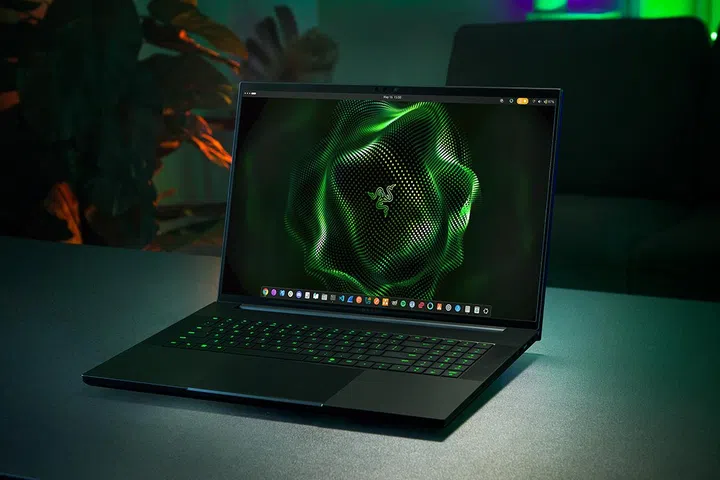
This gaming/AI hybrid demands a high price tag, not helped by the current memory chip shortage.

This gaming/AI hybrid demands a high price tag, not helped by the current memory chip shortage.

Image: Razer

Now we get into what is usually the worst part when we cover these high-end laptops. The base Razer Blade 18 (2026) will start at S$4,999; jumping up to the highest possible config, you’ll end up at an eye-watering S$8,299

That’s in no small part due to the cost of storage and memory; you can only pick a 2TB SSD if you’re going with an RTX 5090, which adds S$2,400 to the price. An optional upgrade to 64GB of memory will also cost you S$900. The current memory chip shortage, which could potentially last till 2030, is out in full force.

Of course, we’re not sure how many people will actually go for the all-or-nothing option that costs more than the average monthly salary in Singapore. No doubt that the numbers are hard to look at, but whether it’s the five or eight grand option you’re viewing, you can purchase the Blade 18 on Razer’s website, RazerStores and select retailers.


Read Full Article At Source