SINGAPORE – As Singapore’s rail network ages and requires more maintenance, the challenge is not just the financial cost of replacing old systems and upgrading trains, but also the inconvenience caused to commuters.
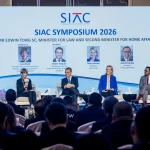
Delays and disruptions arising from maintenance works can affect daily travel, and these impacts must be minimised, panellists said at an In Perspective roundtable hosted by The Straits Times on April 21, where they discussed how smart technologies will shape the future of travel in Singapore.
“There is also a non-monetary cost because delays, or being unable to travel because of maintenance programmes, (are) borne by commuters, and we need to minimise that as well,” said Associate Professor Raymond Ong from the National University of Singapore’s Department of Civil and Environmental Engineering.
Recent examples include planned disruptions on the Circle Line and East-West Line to facilitate repair and upgrading works.
Beyond ensuring reliability, rail operators should also strive to give commuters certainty, said Dr Samuel Chng, a research assistant professor at the Singapore University of Technology and Design.
Dr Chng said commuters value clear communication about planned disruptions as much as reliability itself, in response to a question from moderator and ST’s Asia News Network editor Shefali Rekhi, on how upgrading works can be carried out with minimal disruption.
With certainty, commuters can adjust their routines and plan around disruptions, he said.
“It (need) not be one month ahead of time. It could be just in the morning when I wake up… I look at the map and I say, okay, there is a disruption here, there is a traffic jam there, I am going to reroute,” Dr Chng added.
Panellists said maintaining ageing rail assets is becoming increasingly challenging because older systems behave differently from newer ones.
Mr Yee Boon Cheow, deputy chief executive of infrastructure and development at the Land Transport Authority (LTA), said: “How a new asset behaves versus an ageing asset will be different. You (cannot) manage an ageing asset as if it is still new.”