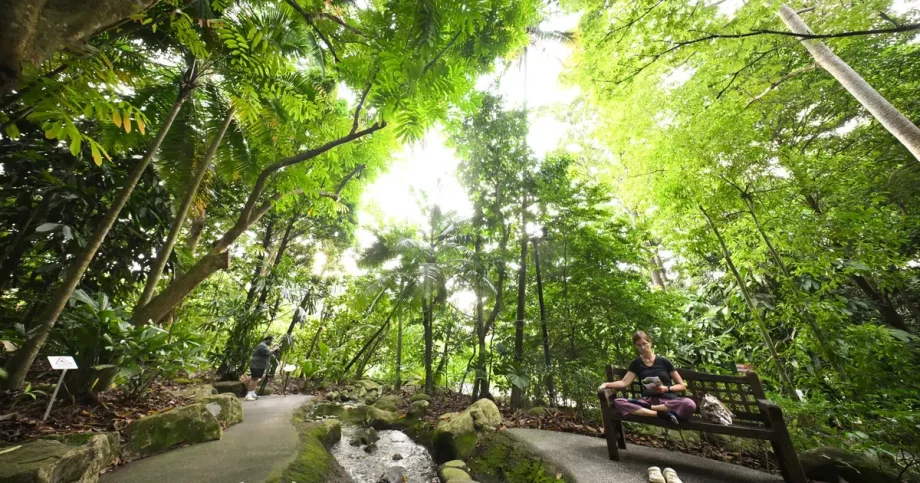
As the Republic’s population reaches super-aged status, the city must include rest spaces in its city planning
I HAVE been visiting Singapore regularly for 25 years. As I have aged and evolved, so too has the city. Today, Singapore has reached super-aged status, with more than one in five residents now 65 and above.
This year, the retirement and re-employment ages rose to 64 and 69, respectively; in October, the government confirmed that they will be raised again, to 65 and 70, from 2029 – a year ahead of schedule.
Singapore has always been a forward-thinking city, and while this move is a sound response to the nation’s demographic reality, it raises a question that goes beyond employment policy.
If people are going to live and work longer, what should their cities give back to help them sustain those longer lives? I believe part of the answer lies in an often-overlooked area of urban planning – recovery and well-being infrastructure.
Recovery is not the same as ageing well
Society’s collective thinking around longevity has long centred on healthcare and retirement savings as main support mechanisms for ageing well.
Accordingly, healthy ageing is seen as a long-term outcome, currently measured through lifespan, chronic disease and mobility.
By contrast, recovery is something different altogether. It is the regular, everyday restoration of our physical, mental and social energy. Access to it is what enables a return to a healthy baseline, to combat burnout, and to enjoy productivity in our later years.
If healthy ageing is where we hope to end up, recovery is what we need to do each day; it matters at 25 as much as at 65. Rest is the pause that enables recovery.
This makes recovery a long-term health sustainability issue, not necessarily just a medical one. Nobody can sustain five or six decades of work on will and effort alone. Burnout, chronic stress and poor sleep erode productivity, raise healthcare costs and shorten careers.
Read Full Article At Source