SINGAPORE – The UN climate change conference COP31 concluded in Antalya, Turkey, on Nov 22 without a final political declaration to tackle the planetary crisis from almost 200 nations gathered there.
But among a smaller group of countries, a plan to limit the release of planet-warming emissions had taken root.
Around 80 countries backed a voluntary pledge mooted by the Turkish host of the summit to raise the share of electricity in global final energy consumption to 35% by 2035, up from the current 23%.
Electrification refers to tweaking fossil fuel-dependent processes to run on electricity instead. This can help cut carbon emissions, especially if the electricity is generated from low-carbon sources, such as renewable energy.
But even if the electricity is still generated by fossil fuels, electrified processes are usually also more energy-efficient. This can also reduce emissions. For example, an electric vehicle is more efficient than a petrol car, even if the electricity used to charge it up is generated by fossil fuels.
International Energy Agency (IEA) executive director Fatih Birol said on Nov 23 that reaching the global electrification target of 35% has the potential to reduce emissions by at least 8 gigatonnes.
That is equivalent to about 1.6 times the US’ annual carbon emissions. The reduction in emissions could be significantly larger if the transitions are faster, he added.
The full list of countries that endorsed the 35-by-35 electrification pledge is not publicly available. Among those in South-east Asia that have said they joined are Singapore and the Philippines.
However, Minister for Sustainability and the Environment Grace Fu said in a media interview on Nov 20 that Singapore will not be able to commit to meeting the target with green energy at this point in time.
This is because Singapore lacks access to many renewable energy options and has to rely on external partnerships, such as to import electricity from low-carbon sources. Singapore’s current share of electricity – generated mainly with fossil gas – in its energy demand is around 30%.
The Straits Times speaks to experts to find out how the electrification push could benefit the developing economies of South-east Asia, the sectors in the region that are ripe for electrification, and how the ASEAN Power Grid could help make this vision a reality.
The case for electrification
South-east Asia’s economy is among the world’s fastest growing, with rapid growth in energy and electricity demand driven by rising incomes, industrialisation and urbanisation.
The region’s current electrification rate is 25%, according to the IEA.
Powering South-east Asian economies with electricity instead of fossil fuels could offer many other benefits beyond tackling climate change, said experts interviewed.
For example, electrification can reduce the region’s reliance on imported fossil fuels.

This will in turn cushion the impact of sharp fluctuations in fuel costs on people living there when geopolitical conflicts happen.
A Nov 9 report by the IEA had found that if the region moves towards electrification by drawing more on domestic and regional power sources – such as interconnected renewable energy projects in South-east Asia – this could save the region almost 30 per cent of its 2025 fuel import bill a year by 2035.
Natharoun Ngo Son, South-east Asia regional director for energy and economics at Cambodia-based not-for-profit organisation EnergyLab, said that in the 2000s, electrification programmes in the region were mostly aimed at providing energy access to vulnerable populations disconnected from the grid.
“The end goal was to move them out of energy poverty,” he said.
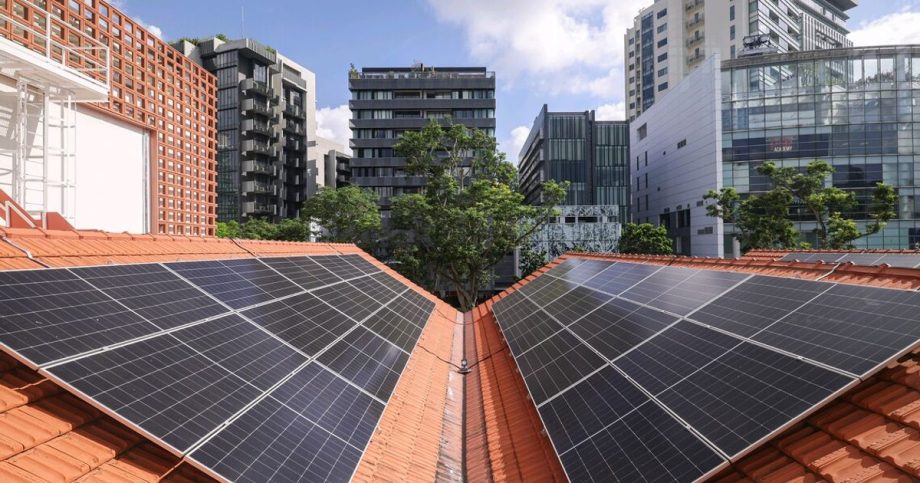
But with the availability of more affordable technological solutions that can be quickly rolled out, such as rooftop solar systems, the understanding of energy poverty has evolved, he added.
For instance, it could also be understood as the lack of reliable and cheap electricity for a rural school or health centre, as this could impact the quality of its services.
“It also means fuel poverty for drivers deriving their income from hailed or platform rides, or carrying food or passengers, and seeing their revenue decrease because of overly expensive fuel prices due to the Hormuz crisis,” he said.
The closure of the Strait of Hormuz due to the US-Israel war on Iran in February highlighted the region’s heavy reliance on imported oil and gas. The narrow waterway is a major global shipping route normally responsible for 20 per cent of the global oil trade.
In 2025, about 66% of South-east Asia’s crude oil imports and 21% of its liquefied natural gas imports passed through it, according to the IEA.
Following the blockade of the strait, many countries in the region suffered from volatile fuel prices, economic disruption and strain on energy systems. Indonesia and Myanmar implemented fuel rationing, while remote work was encouraged in places like the Philippines and Vietnam.
As a buffer against future supply shocks, some countries in South-east Asia are exploring a regional oil stockpiling system that allows countries to share fuel during times of supply disruption.
Dinita Setyawati, energy think-tank Ember’s external affairs and strategic impact lead for Asia, said that while ramping up oil reserves helps to buy time, energy security is not ensured if countries continue to rely on imported oil instead of investing in infrastructure for alternative energy sources.
“Electrification is the faster, more durable answer to the energy crisis,” she said, noting that it is not just oil and gas affected by price fluctuations.
Coal, the dirtiest form of fossil fuel, accounted for about 45% of the region’s power mix in 2025. Coal prices have also risen partly due to higher demand for it, as countries switched away from gas after the Hormuz disruption.
Some countries in the region are already embracing the deployment of renewables.


Read Full Article At Source