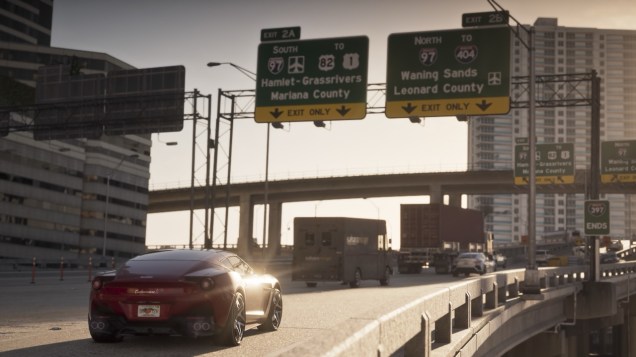
Some months ago, I wrote about how, even prior to its full reveal, we already knew what GTA 6 was going to be. Although not unique to the franchise by any means, GTA games had always followed a very clear formula, rarely upending it in any meaningful way. I strongly suspected that the 13-year wait for GTA 6 would result in a very pretty version of a very familiar game. As release approached, I worried that for all of the praise heaped upon its story and incredible level of detail, all of that was merely a veneer on the same game we’ve been playing for 25 years.
And in many ways, that is true; at its most basic level, GTA 6 is still a game about driving from point A to point B, and maybe shooting some ne’er-do-wells when you get there. But I dramatically underestimated the impact of that veneer, and just how differently a familiar formula can feel when accompanied by impactful systems and relationships.
The freeform nature of GTA 6’s world, and the objectives you have over the course of a given mission, are largely identical to previous games. You can just drive around and make your own fun, or deal with violent drug smugglers, or pilot a boat or plane or car through a series of checkpoints. It’s all very familiar on paper.
But never before in a GTA game have I considered whether I have time to go and do one of those things because I have someone I care about waiting at home. Only rarely in a GTA have I decided to drive carefully, lest I face the consequences of doing almost anything I’d traditionally associate with a GTA game.
So much of GTA 6’s focus is on the relationship between Lucia and Jason. I quickly found myself caring about them both, and for all of Rockstar’s talk of their romantic relationship being optional, I truly can’t fathom playing this in a way that doesn’t fully embrace their love. And the way that permeates things even in Chapter 1–the phone calls, the text messages, the interactions at home–has forced some degree of role-playing on me.