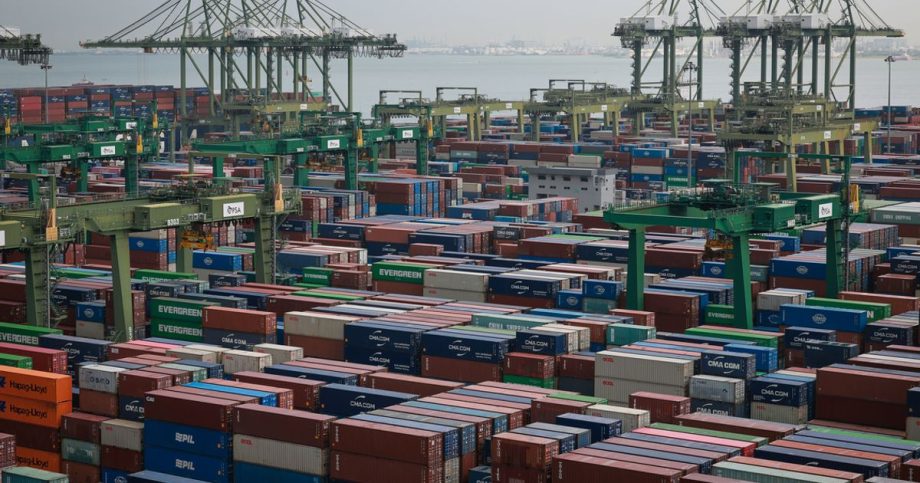
SINGAPORE – Singapore and 13 other trading partners face potential new US tariffs after its trade agency accused them of producing more goods than they would under normal, market-oriented conditions.
The tariff rate under Section 301 could be as high as 20% and become effective in early 2027 as proposed by United States Trade Representative (USTR) Jamieson Greer in a statement released on Nov 25 (Washington time).
However, the tariff rate will be net of previously announced Section 301 tariffs of 12.5% related to forced labour concerns, bringing the overall tariff burden lower than the announced 20%. Also, the tariff is subject to a comment and hearing process through January which could change the outcome.
“The Trade Representative proposes that appropriate action to obtain the elimination of the acts, policies and practices includes to consider applying tariffs of up to 20%, net of existing Section 301 tariffs, on all goods of Singapore, with exemptions for certain goods,” said a statement issued by the Office of the USTR.
Greer also offered to consider a trade deal with Singapore that would cut the tariff rate to 10%.
“The Trade Representative further proposes to consider adjusting the tariff rate applied to each good to 10% to account for any commitments in the event that Singapore were to reach an Agreement on Reciprocal Trade with the United States or conclude other negotiations that are responsive to the determinations in this investigation into the acts, policies, and practices of Singapore,” said the statement.
In September, Deputy Prime Minister Gan Kim Yong said that Singapore will continue to engage the US on lowering tariffs and help businesses and workers adapt, but will consider any steps carefully in response to the negotiations.
As a major trading hub with around $2.5 trillion in goods and services trade each year, including $1.4 trillion in goods, any import prohibition would have significant implications for Singapore’s trade, Gan said on Sept 8.
While those comments by Gan were in the context of tariffs related to alleged trade of goods associated with forced labour, some of the policies targeted by the newly proposed tariff are also related to trade and some of Singapore’s core initiatives to promote manufacturing and job creation here.
Read Full Article At Source