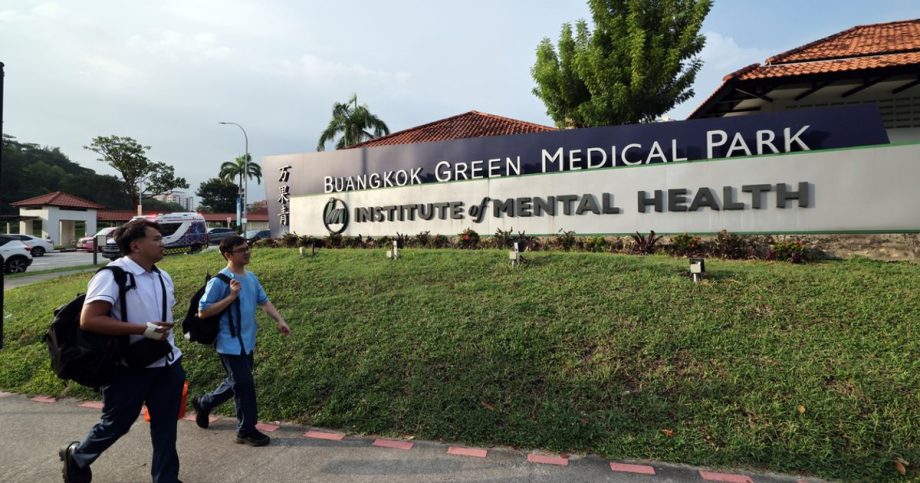
SINGAPORE – It has been over two decades, but I still remember a friend laughing when he learnt that a mutual acquaintance had been admitted to the Institute of Mental Health (IMH).
“She got admitted to Woodbridge, she’s in the loony bin,” he said.
It was a cruel, yet common comment then.
Nobody finds it funny when they learn that someone has been hospitalised for a physical illness, particularly a severe one.
But when it comes to mental health, the empathy may not be so forthcoming.
Today, few would think of IMH as an asylum. But a stay or even a visit there still carries the fear of discrimination.
IMH traces its roots back to the 19th century, and went through several iterations from insane hospital to lunatic asylum in various parts of the island.
Before Singapore’s first Insane Hospital was built in 1841, people with mental illnesses were often locked up in jails, neglected and isolated from society.
To shed old baggage, it got a makeover and a new name as Woodbridge Hospital in 1951. It moved to Buangkok in 1993 with a slightly reduced bed capacity and added the name IMH.
Former IMH chief executive Daniel Fung speaks of a shift in mindset away from prolonged institutional care and helping patients recover and live meaningful lives in the community then.
But more than 30 years later, many continue to associate being warded there with having a crisis that is best kept secret.
The institute is preparing to be renamed yet again to the National Centre for Mental Health Singapore in 2027, with a major campus expansion to be completed by 2040.
Will this erase the stigma or will old prejudices follow?
Reinforcing the safety net
By elevating psychiatric care and giving the institute the same standing as the national centres for cancer, heart or eye health, the Government is sending a clear signal that mental health is just as important as physical health.
Like these centres, it will lead research, coordinate psychiatric care across hospitals and build sector-wide capabilities.
This is the result of a shift that has unfolded largely over the past two decades. When Fung first joined IMH in 1993, mental health was not a major national priority and specialists were scarce.
Read Full Article At Source